Cutting and processing
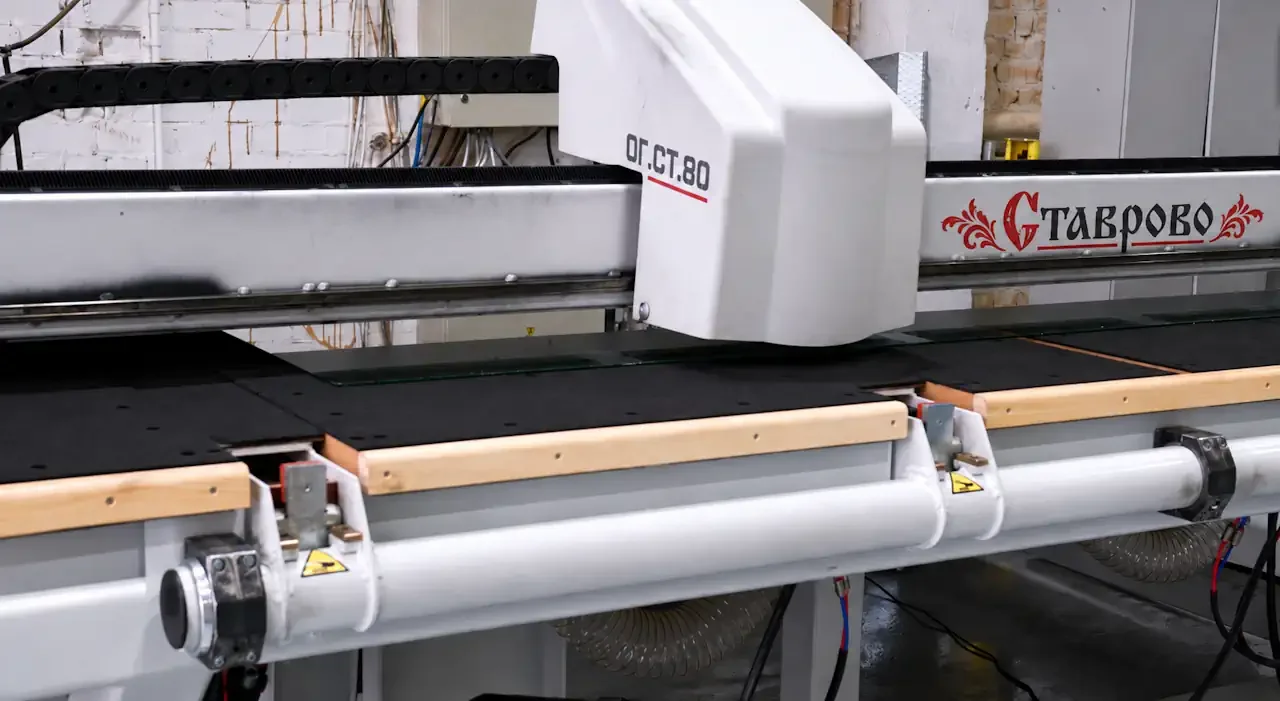
We cut glass on a CNC machine and prepare blanks for the next route: edge work, holes, bending, or lamination. Standard cutting thicknesses are 2–8 mm; under 2 mm (down to 0.55 mm) and above 8 mm are handled as special projects. Maximum cutting format is 2000 × 1500 mm, with straight and shaped cuts at ±1 mm accuracy. Edge processing and drilling run on a manual machine or a 5-axis CNC with milling — within the same thickness and size limits.
Contents
Cutting and initial glass processing
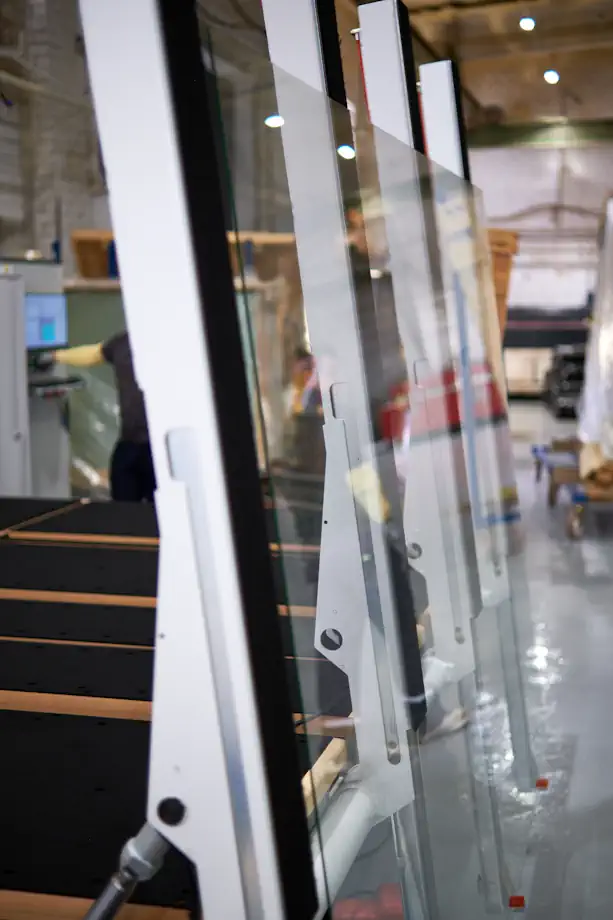
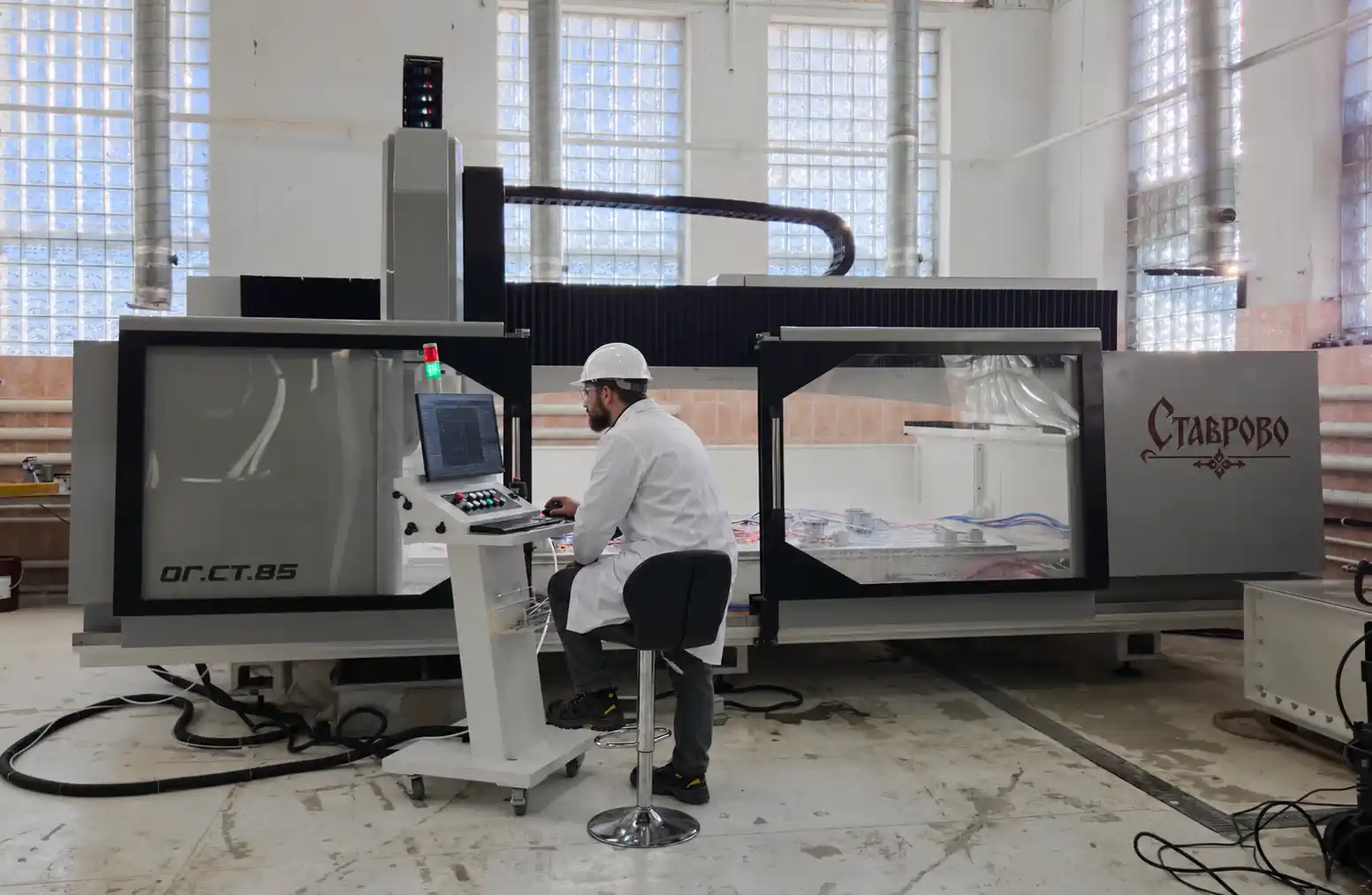
Octoglass cuts and initially processes flat glass on our own site. Nesting runs on a computerized CNC machine: the program sets the outline, and the operator does not intervene in the cut itself — that reduces part-to-part scatter and keeps the result predictable for downstream stages.
The standard working thickness range is 2–8 mm. If you need to cut under 2 mm (down to 0.55 mm) or above 8 mm, we treat the job as a special project: we assess fit, route, and risk before launch, not after a failed first attempt.
Maximum cutting format is 2000 × 1500 mm. Within that envelope we cover compact technical parts and larger blanks for automotive or special glazing — provided thickness and geometry are agreed up front.
Straight and shaped cuts are available. Straight outlines suit rectangular and simple polygonal parts; shaped cuts fit when a curved or complex edge is needed already at nesting, not as a later “by-eye” fix.
Cutting accuracy is ±1 mm. That is a fixed production corridor given roller-cut physics and head positioning: it is enough for most blanks, and critical fits should be drawn with allowance for this tolerance.
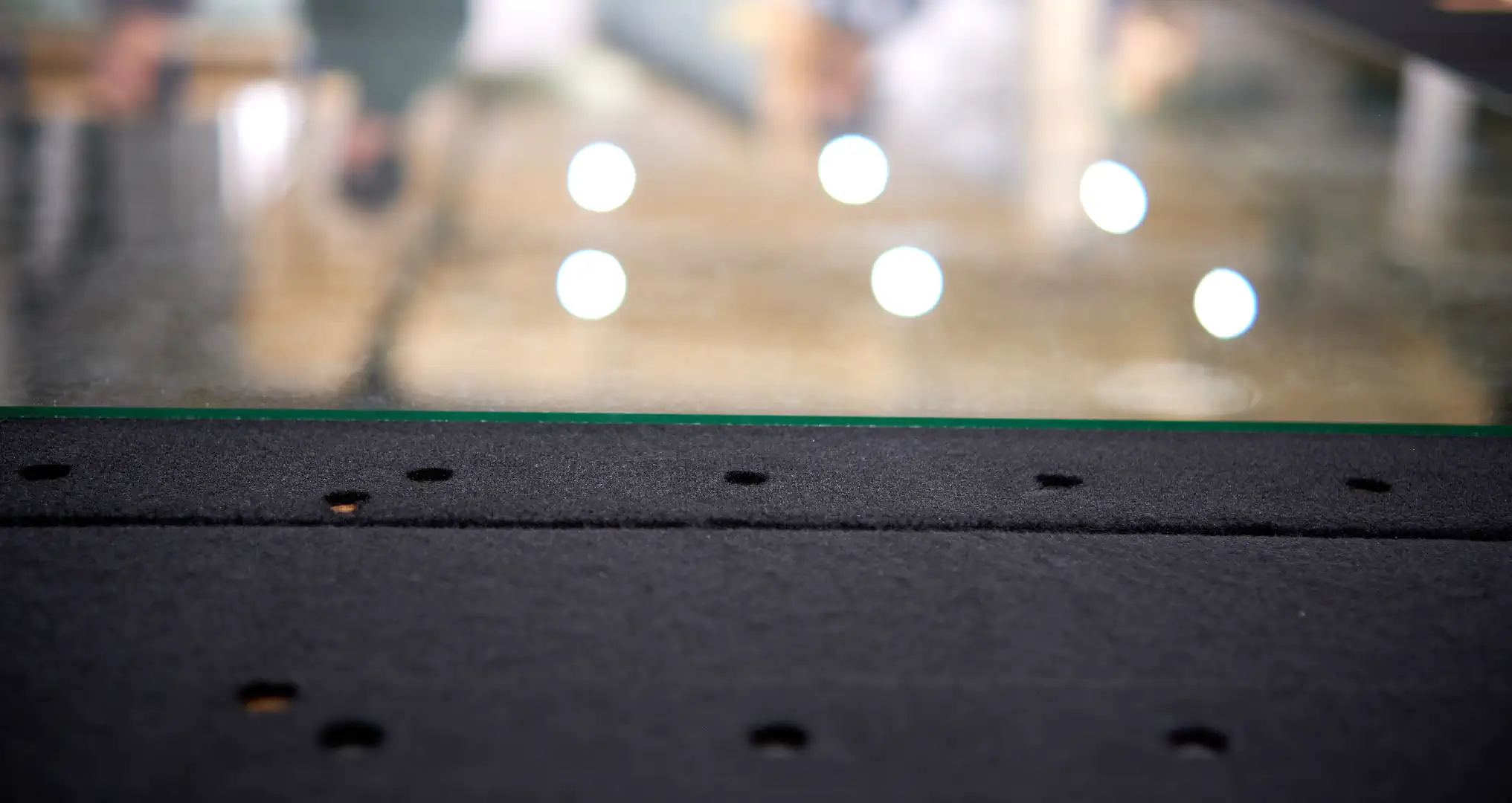
Cutting is not “just split the sheet” — it is the first step of a process chain. After nesting, the edge keeps break marks and stress zones; without follow-on edge work the blank handles transport and later stages worse. That is why the “cut → edge/holes” route is often planned together.
We work from customer drawings and digital models: DXF/DWG are preferred, though a PDF or sketch can support a first assessment. The earlier outline, thickness, and next stage are locked, the shorter the path from the first sheet to stable lot repeat.
For B2B and OEM work, cutting works as a standalone service or as a stage in the full Octoglass loop — handing off to faceting, bending, or lamination on the same site. On the site we publish confirmed format, thicknesses, and accuracy; specific tolerances and timing are agreed per order.
Edge processing and hole drilling
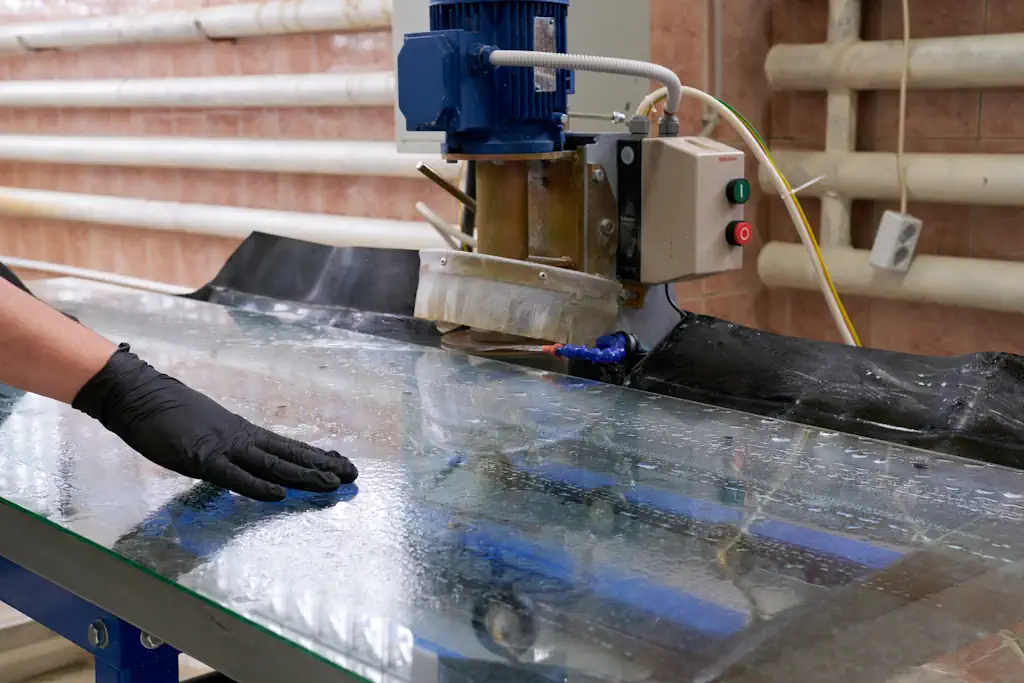
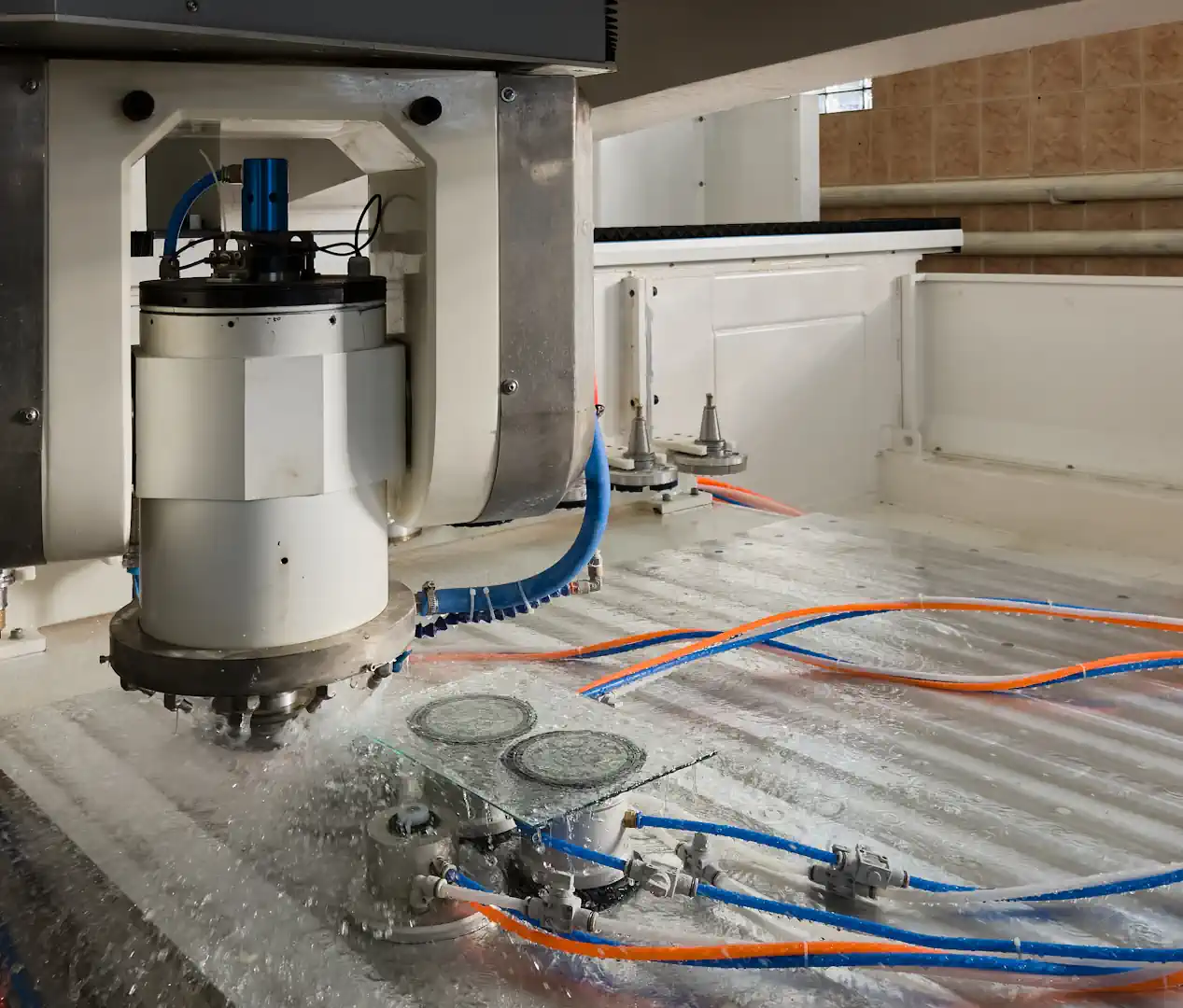
After cutting, Octoglass processes edges — grinding or polishing — and drills holes. This is a separate stage tightly linked to nesting: it removes sharp break marks, lowers the risk of spontaneous breakage in transit, and prepares the blank for bending, lamination, or assembly.
Two routes are available. The manual machine is used where nothing else can close the job: a non-standard fit, limited edge access, or geometry better finished by hand under operator control.
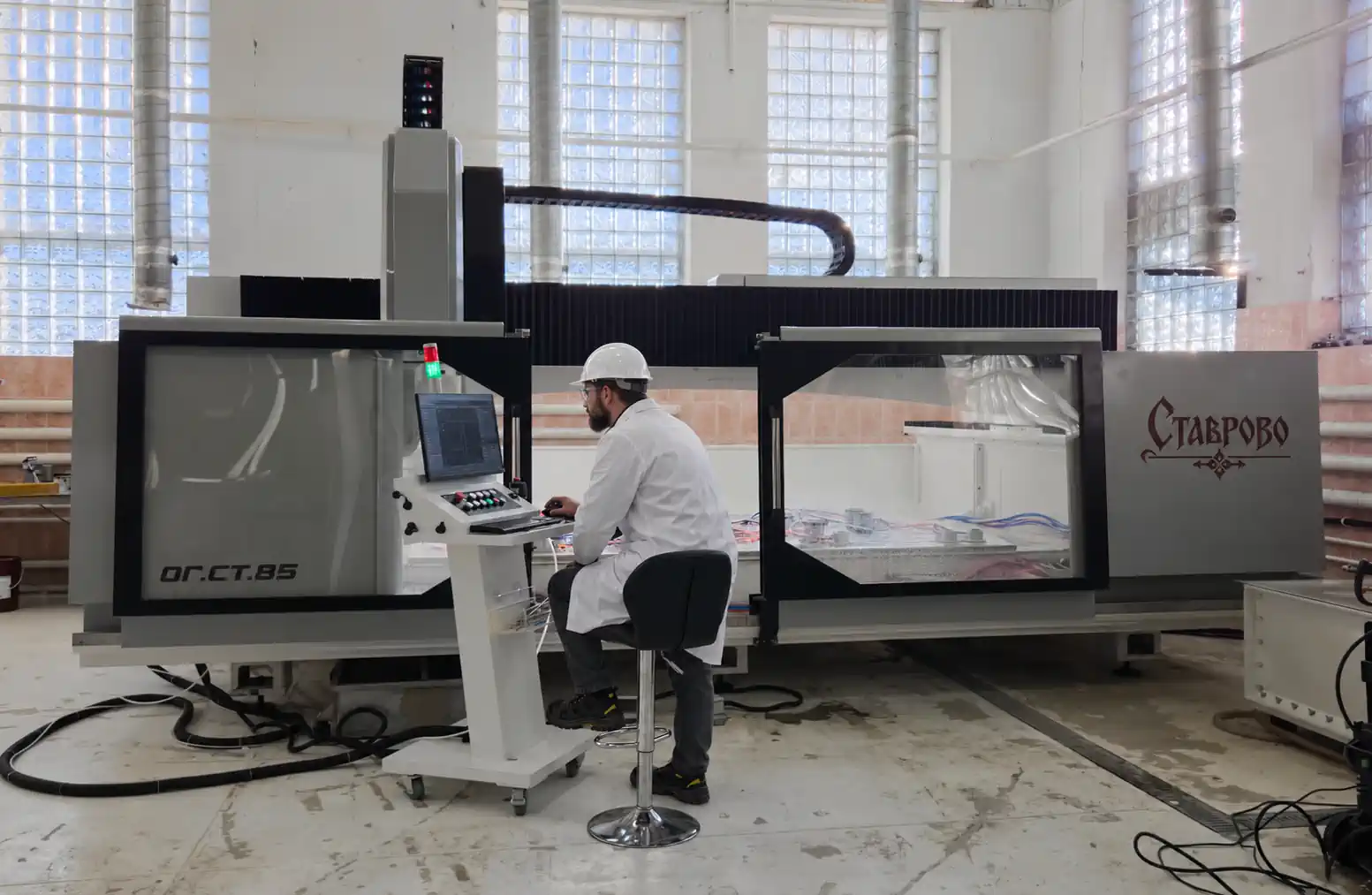
The second route is a 5-axis CNC machine. On it we grind and polish edges, drill holes, and mill when needed. CNC fits when series repeatability and accurate hole-to-outline registration to an agreed program matter.
Milling on the 5-axis machine widens machining geometry: not only round holes, but more complex pockets and contours when the drawing calls for them and the material supports a stable cycle.
Thickness and format limits match cutting: standard 2–8 mm, format up to 2000 × 1500 mm; under 2 mm (down to 0.55 mm) and above 8 mm are special projects. That makes it easier to join nesting and finishing in one brief without hidden size surprises.
Grinding covers baseline edge prep; polishing is for a smoother, visually and tactilely cleaner edge for visible zones or the next process step. We lock the mode at assessment: “polish everywhere” without a reason only lengthens the cycle.
Hole drilling is planned with the edge work: diameters, edge offsets, and operation order affect blank strength. If holes are critical for fasteners or sensors, send a drawing with tolerances up front rather than clarifying after the first lot.
A outline, thickness, hole list, and a note on manual versus CNC and grinding versus polishing are enough to start assessment. Exact pricing and timing follow once inputs are agreed; related stages such as faceting, bending, and lamination can sit in the same enquiry.
Technical capabilities
Specific tolerances, edge mode, and timing are agreed per part.
| Maximum format | up to 2000 × 1500 mm |
|---|---|
| Thickness (standard) | 2–8 mm |
| Thickness (special project) | 0.55–2 mm and above 8 mm |
| Cut type | Straight and shaped |
| Cutting accuracy | ±1 mm |
| Edge and hole processing | Manual machine or 5-axis CNC (incl. milling) |
- Maximum formatup to 2000 × 1500 mm
- Thickness (standard)2–8 mm
- Thickness (special project)0.55–2 mm and above 8 mm
- Cut typeStraight and shaped
- Cutting accuracy±1 mm
- Edge and hole processingManual machine or 5-axis CNC (incl. milling)
Pricing
Final cost depends on volume, material, and process route. Exact pricing is available on request.
| Cutting | on request |
|---|---|
| Edge processing | on request |
| Hole drilling | on request |
- Cuttingon request
- Edge processingon request
- Hole drillingon request
Capabilities
CNC cutting
Straight and shaped cuts on a computerized machine at ±1 mm accuracy.
Format up to 2000 × 1500 mm
Maximum size for cutting and follow-on edge and hole processing.
Edges and holes
Edge grinding or polishing and drilling — manual or on a 5-axis CNC.
5-axis milling
The 5-axis CNC also supports milling when more complex machining geometry is required.
How we work
01
Inputs
Drawing or DXF/DWG, glass thickness, cut type, and stages needed after cutting.
02
CNC cutting
Straight or shaped cutting up to 2000 × 1500 mm at ±1 mm accuracy.
03
Edges and holes
Edge grinding or polishing and drilling on a manual machine or 5-axis CNC; milling when required.
04
Check and next stage
Blank check and handoff to faceting, bending, lamination, or shipment.
What we need from you
Drawing or model
DXF/DWG or an agreed drawing with dimensions and cut outline.
Glass type and thickness
Thickness in the standard 2–8 mm range, or a note that it is a special project.
Quantity and lot
Order volume: prototype, pilot, or series.
Further processing
Whether edge work, drilling, faceting, bending, or lamination is required.
Production

Related stages
Faceting
Straight and curved bevels, edge grinding and polishing on CNC or a manual machine up to 2500×1500 mm.
Learn more
Glass bending
Gravity glass bending and plastic forming on CNC-controlled furnaces.
Learn more
Lamination
Lamination of flat and bent glass on EVA and ionoplast; PVB and TPU as non-standard projects.
Learn more