Glass bending and plastic forming
We bend glass and form plastic on modern CNC-controlled furnaces. Gravity method, online temperature and program monitoring, and tooling checks after every cycle.
Bending and forming
Octoglass provides glass bending and plastic forming for projects that need controlled curved geometry, not only a flat blank. We support automotive and technical work, one-off prototypes, and repeatable lots: from an agreed drawing or sample to a bent part ready for further processing, assembly, or delivery. You do not need to know the furnace from the inside — describe the part and constraints on fit, material, and the next stage.
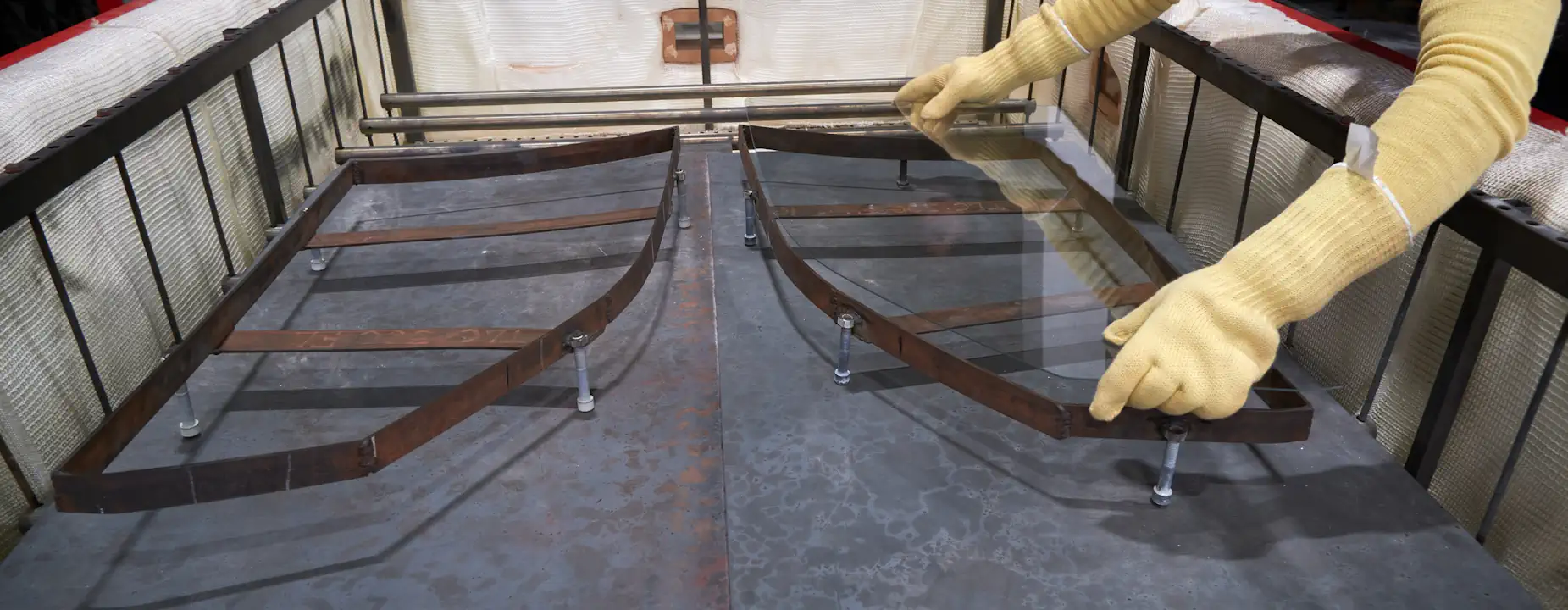
At Octoglass, glass bending is a high-temperature gravity process: the sheet is heated to a program and settles onto the tooling under its own weight. We do not offer cold bending (used in some architectural work and often taking months): our workflow is built around a controlled hot CNC cycle with monitoring and tooling checks. The result depends on mold accuracy, regime stability, and post-cycle discipline — an input error shows up as curvature deviation, not as something to “touch up later”.
We apply extremely strict bending quality requirements because we work with electrochromic devices that demand categorically high complementarity of curved surfaces. Mismatched layer shapes are unacceptable here — so geometry, program, and tooling are set for that precision level, not for “approximately bent” glass.
Alongside glass bending we form plastic within the same production workflow. That helps when a product or kit needs both glass and plastic curved elements, or when the customer wants both materials handled by one contractor with clear ownership of geometry and timing. Plastic terms are agreed separately: material, thickness, expected shape, and lot size shape the route just as they do for glass.
A typical request starts with clarity: overall size, thickness, radii, allowable deviation, whether tooling already exists or must be made, and what happens after bending. The earlier those conditions are agreed, the shorter the path from the first blank to a stable repeated shape in series. If data is thin, we help define a minimal set for assessment — without promising specs that are not yet in the brief.
For B2B and OEM work, bending is often embedded in a longer route: cut and edge → mold → bend → inspect → further assembly. We keep the service as a production stage with clear boundaries, not a shop of undocumented one-off bends. That makes it easier to interface with engineering, procurement, and acceptance on the customer side.
Technical capabilities
Numeric tolerances and specific furnace regimes are agreed per part.
| Maximum glass size | up to 2500 × 1500 mm |
|---|---|
| Glass thickness | 2–8 mm; under 2 mm — on special order |
| Method | Gravity bending |
| Materials | Glass; plastic forming — per project |
| Process control | CNC, online temperature and program monitoring |
| Annealing | Stress relaxation after bending — included in the cycle |
- Maximum glass sizeup to 2500 × 1500 mm
- Glass thickness2–8 mm; under 2 mm — on special order
- MethodGravity bending
- MaterialsGlass; plastic forming — per project
- Process controlCNC, online temperature and program monitoring
- AnnealingStress relaxation after bending — included in the cycle
For glass we cover formats up to 2500 × 1500 mm. The working thickness range is 2–8 mm; on special order we can also bend thinner glass (under 2 mm) when the design, tooling, and program allow a stable result. Exact tolerances, glass type, and edge details are agreed per part — we do not publish unverified numbers on the site. If a job sits at the edge of the range, we say so before launch, not after a failed first cycle.
Size and thickness set more than a yes/no: they shape the preparation route — cutting, edge work, faceting if needed, mold selection or manufacture, and heating/cooling parameters. A large thin blank behaves differently from a compact thicker part; the furnace program and support on the tooling are matched to that pair. The same “label numbers” without a drawing and edge description do not yet yield a full quote.
If you already have a digital model or a 3D scan, it can underpin tooling and inspection. If the model still needs to be captured, related Octoglass services for digitization and bending molds keep the chain intact between sample geometry and a repeatable furnace cycle. That reduces the risk of tooling made “by eye” from photos that later fails to fit.
Photos of the sample from several angles, notes on the mating part, and marks where fit is critical versus where a wider corridor is acceptable also help. They do not replace a drawing, but they speed the first reply: what bending can actually close, and what needs tooling or route work.
Capabilities
Gravity bending
Glass bending by the gravity method to an agreed program and tooling.
Online monitoring
Continuous online monitoring of temperature and the bending program.
Tooling control
Tooling geometry is checked after every bending cycle.
Annealing after bending
Stress relaxation in the glass is part of the bending procedure; engineers set the regime for the blank, glass type, and coatings.
Furnaces, program, and control
We run modern CNC-controlled furnaces. The furnaces have been fully rebuilt, modernized, and refined by us — not for a cosmetic fleet refresh, but to push bending accuracy for real production work: stable heating, a predictable cycle, and controlled shape repeatability. In-house equipment refinement is part of how we keep the process under control instead of taking a furnace “as shipped”.
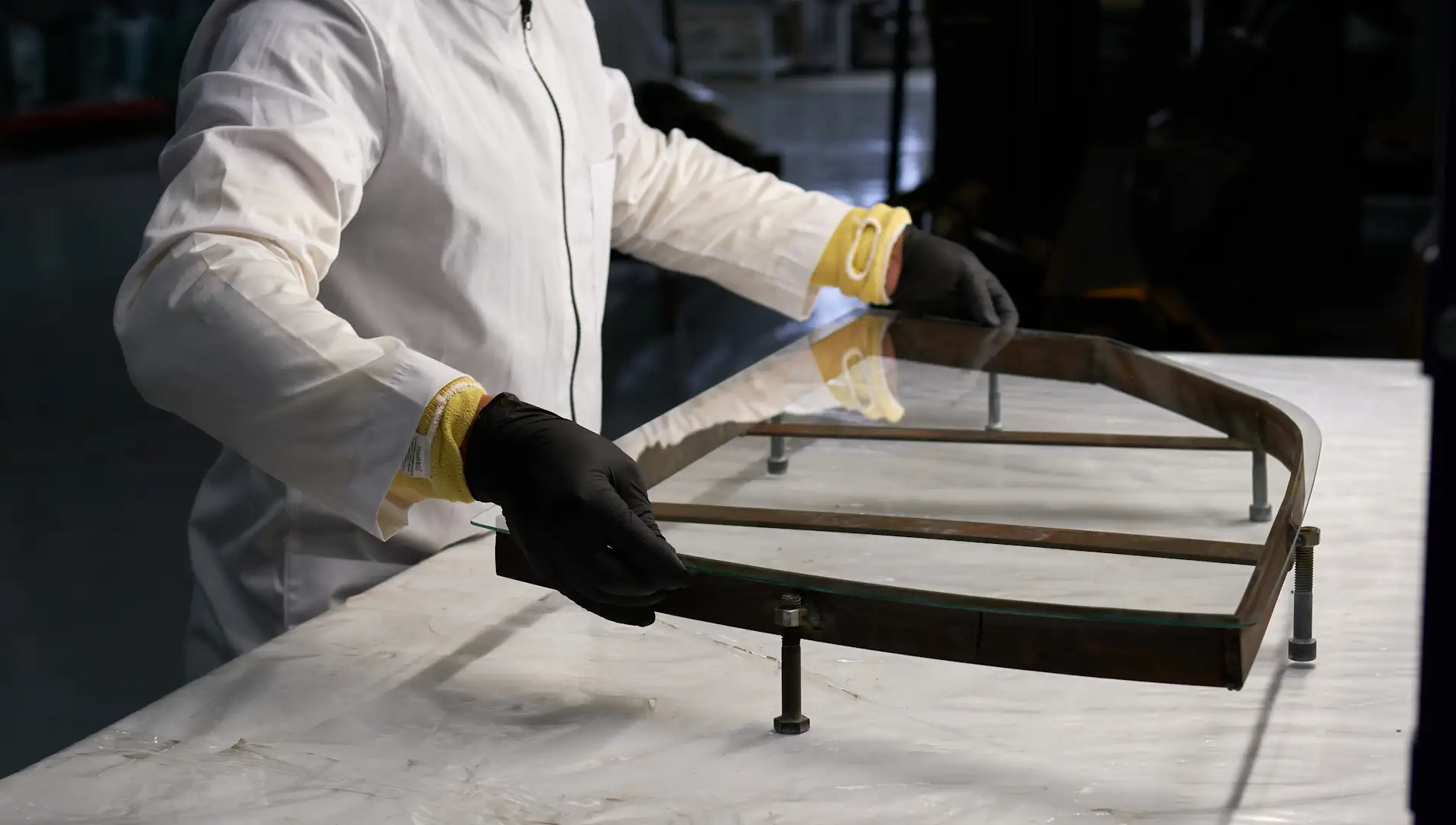
We use the gravity bending method: the blank sits on tooling, is heated to a program, and the glass takes the intended curvature under its own weight. That approach needs careful loading, a clean support scheme, and an agreed temperature curve — so preparation and program control matter as much as the furnace itself. Chaotic heating without a locked program fits poorly with repeatable geometry.
Annealing after bending is part of the procedure — stress relaxation for tensions built up during forming. Without a correct anneal, glass can crack days or about a week after leaving the furnace. Annealing is not an optional extra: it is built into the cycle, and plant engineers set the regime for the blank, glass type, and coatings.
Furnaces undergo regular re-checks and maintenance. In parallel, temperature and the bending program are monitored online: operators and the system see the cycle as it runs, not only the start setpoints. That reduces the risk of an unnoticed regime drift and helps investigate disputed lots faster when geometry or optics raise questions. Online monitoring is a working cycle tool, not a slogan.
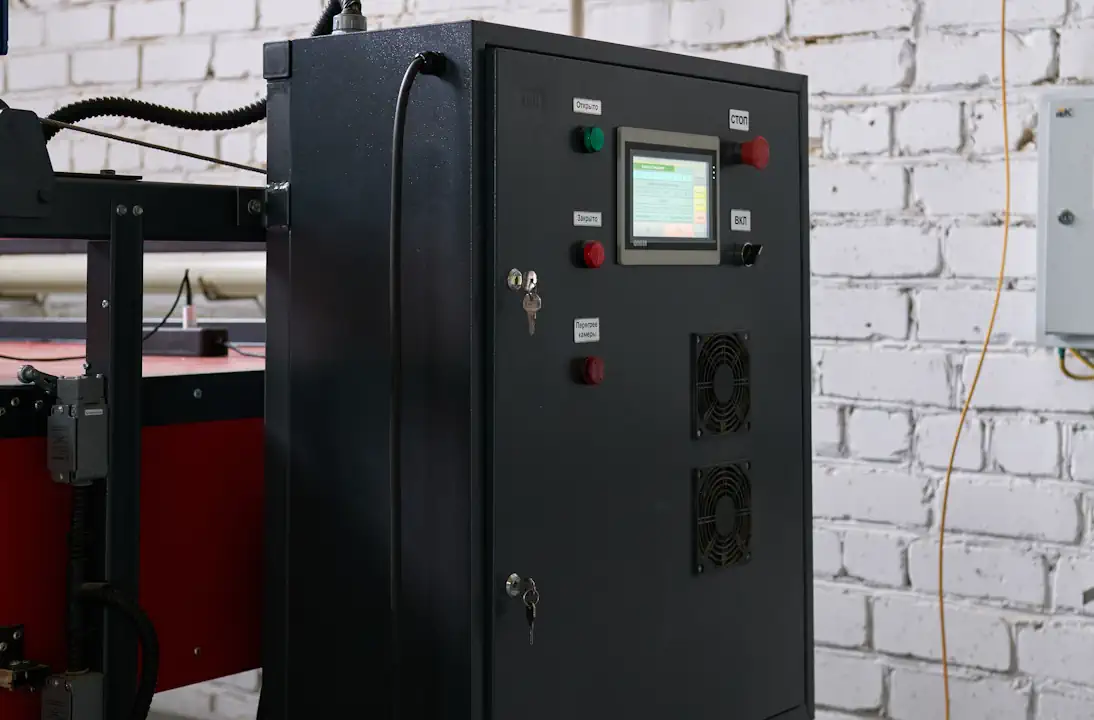
The CNC control panel with chamber status indication is part of that loop. For the customer it means a reproducible process, not an abstract “we have a furnace”: the program is locked, the cycle is observed, and deviations are caught at the equipment stage — not only after the part has already moved downstream. When a lot repeats, it is easier to rely on a proven program and checked tooling than to start from scratch every time.
Tooling and cycle stability
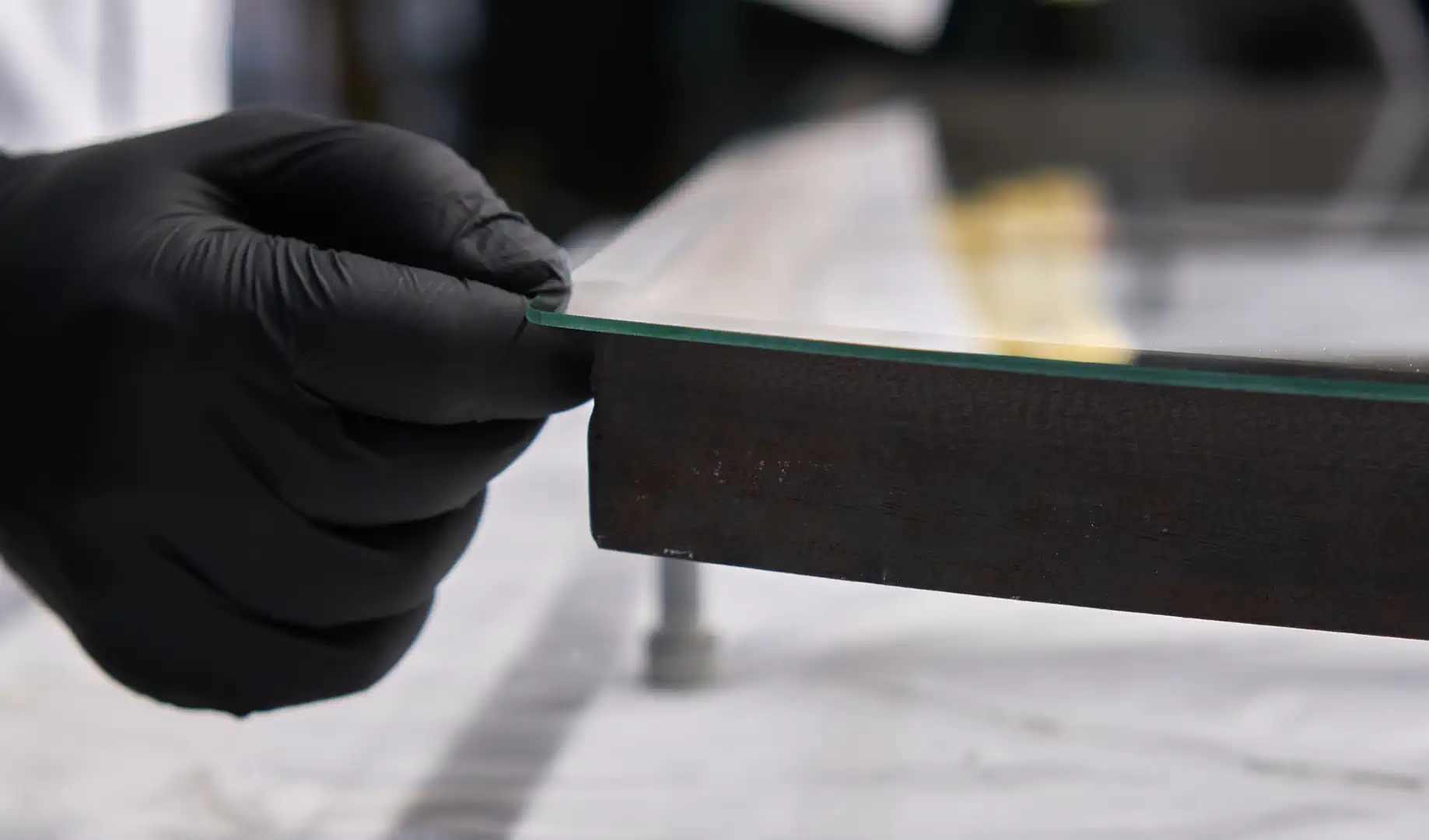
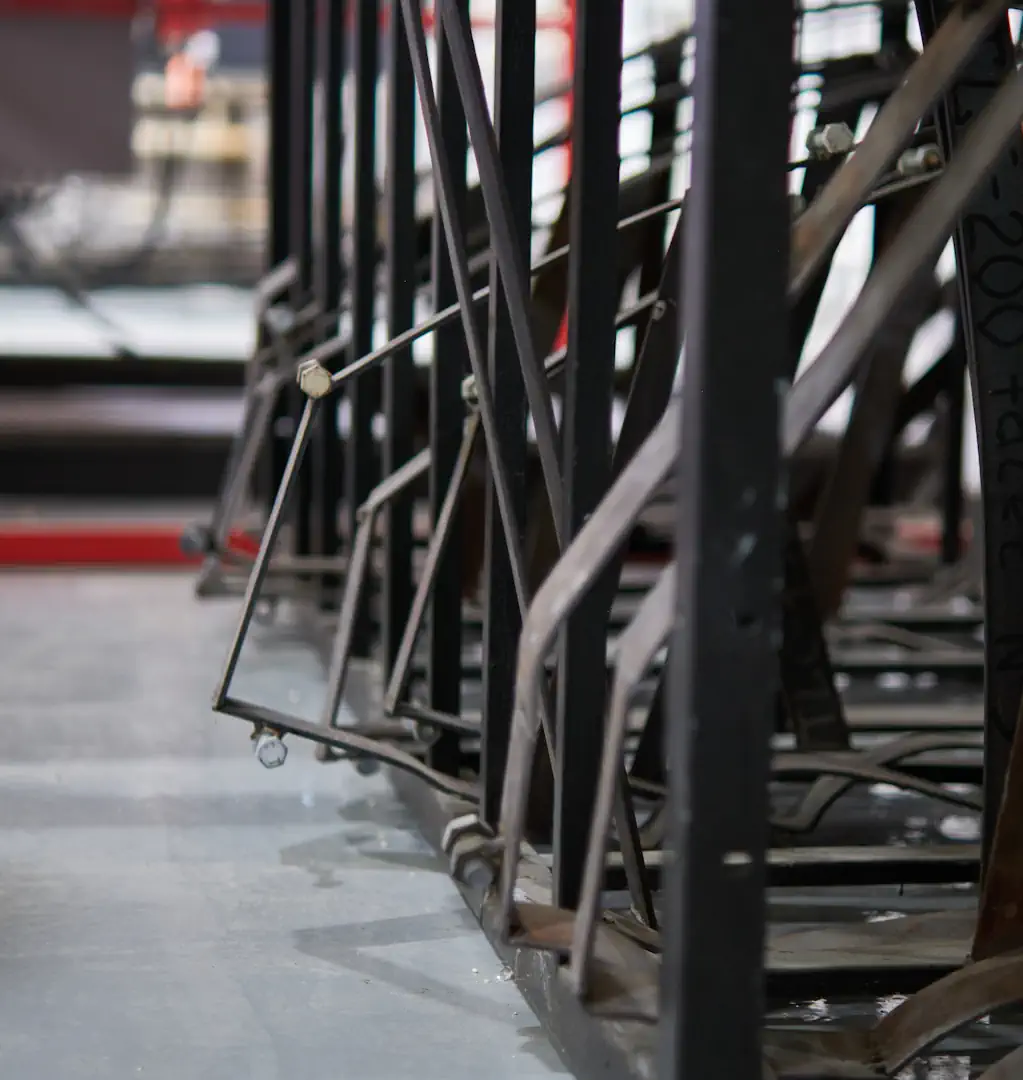
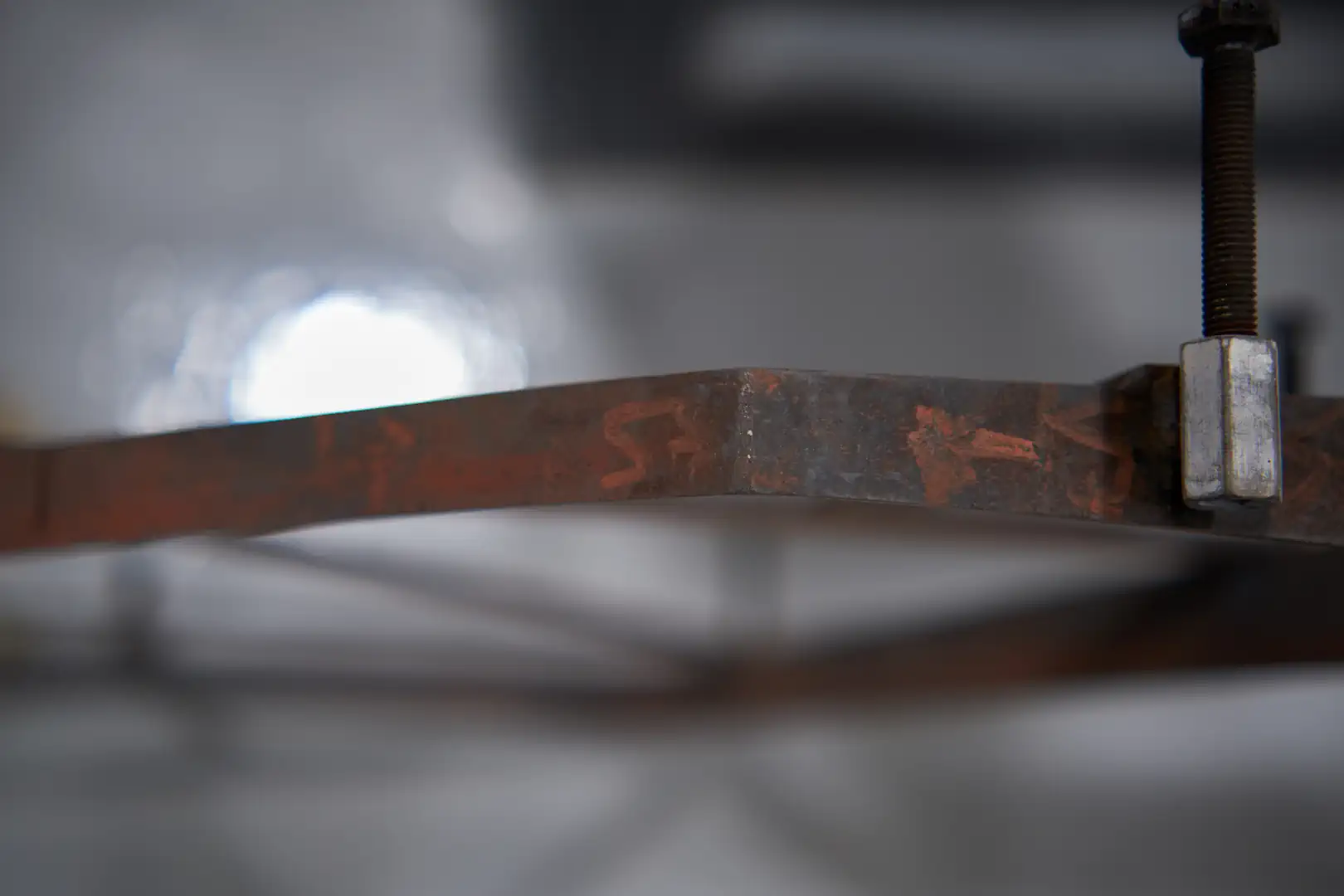
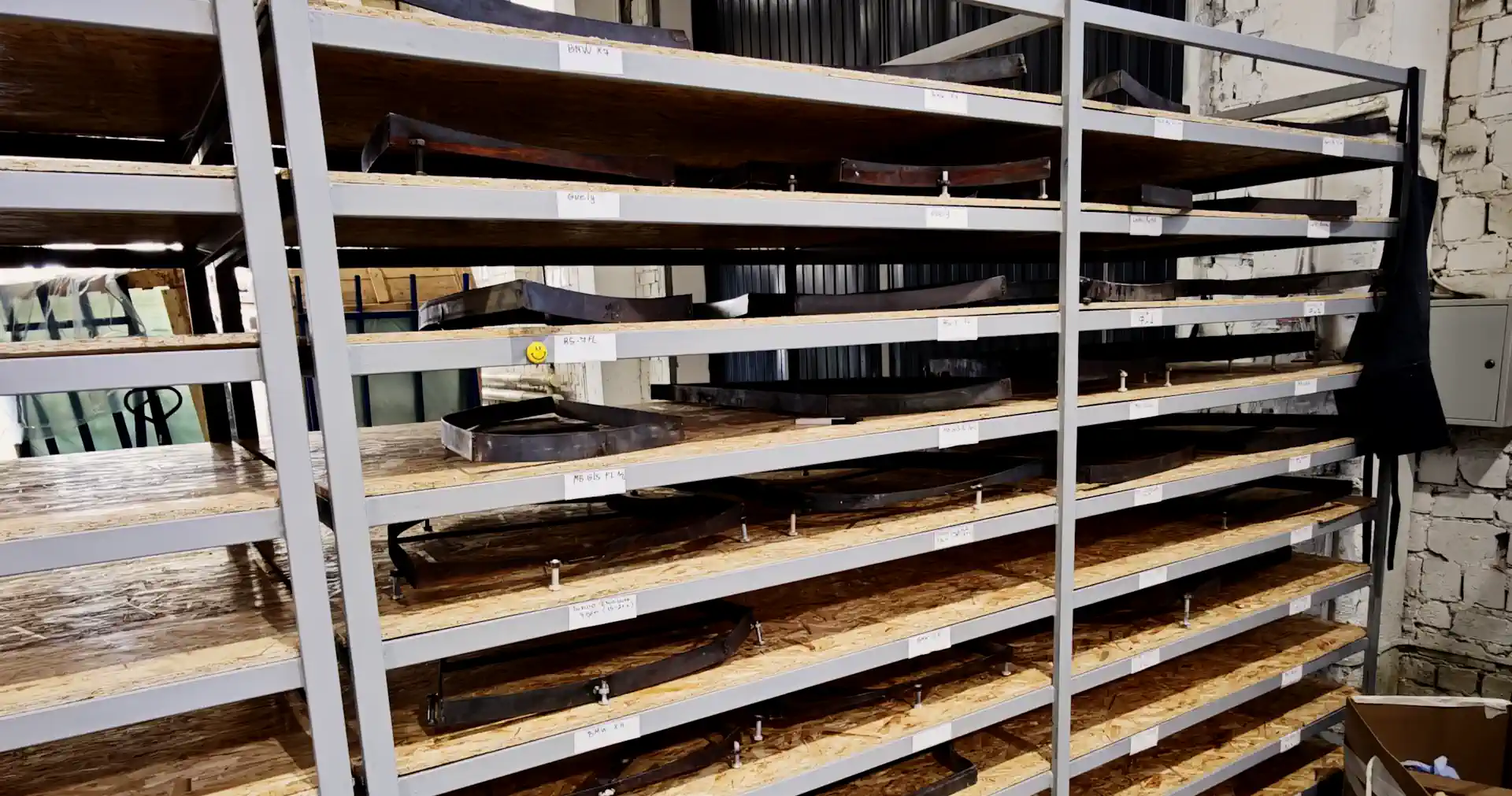
Tooling geometry is checked after every bending cycle. That is production discipline: a mold is a working tool under thermal load, and even small support shifts can pull the next lot off the agreed profile. Post-cycle checks let us adjust, set aside questionable tooling, or stop a series before scrap accumulates. For electrochromic assemblies this discipline is critical: without high complementarity of curved layers the device simply cannot be built.
The tooling → program → inspection link matters most when the part must mate with a body, frame, or counterpart. Bending alone does not replace engineering of fit dimensions, but it can hold shape within an agreed corridor when inputs and tooling match the job. If fit is critical, plan geometry checks and, if needed, route refinement up front.
After bending, a part may stay a blank for lamination, receive further edge work, or ship as bent glass/plastic. We lock the route up front: that keeps schedules realistic and avoids mixing different process requirements into one vague brief. Clear stage boundaries reduce disputes over what “bending” already includes versus what is a separate service.
When you need a full chain from sample to curved glazing, Octoglass can cover neighbouring stages on one site: cutting and edge prep, faceting, bending-mold manufacture, and multilayer assembly when required. Bending then sits as the central forming step — not an isolated “heat and bend” service. Related services below assemble that loop around the bend.
A short task description and available inputs are enough to start the conversation. We will clarify whether size and thickness fit, whether new tooling is needed, and which next stage makes sense after bending. Exact pricing and timing follow once inputs are agreed; on the site we publish only confirmed capabilities — no invented tolerances or lead times invented from thin air.
How we work
01
Inputs and tooling
Drawing, model, or sample; agreeing shape, thickness, and route. Tooling made or selected as needed.
02
Blank preparation
Cutting and edge processing (faceting if required) before furnace loading.
03
Bending and annealing
Gravity bending to a CNC program and annealing for stress relaxation — with temperature and cycle monitoring.
04
Inspection and next stage
Tooling geometry check after the cycle; further processing or lamination if required.
What we need from you
Drawing or model
DXF/DWG, 3D model, or agreed dimensions and radii.
Thickness and material
Glass or plastic type and target thickness within capability range.
Tooling
Customer-supplied mold or a request to make bending molds.
Follow-on route
Whether cutting/processing, faceting, lamination, or delivery of the bent blank is required.
Production
Related stages
Cutting and processing
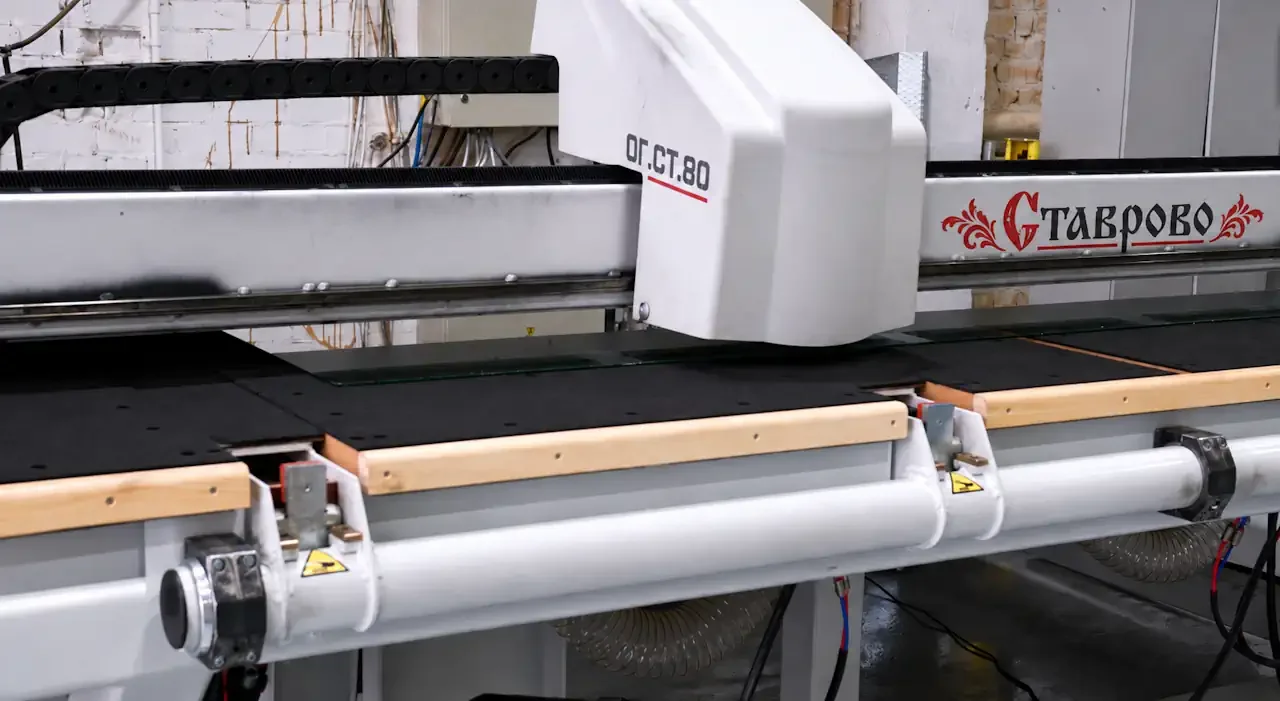
CNC cutting, edge processing, and drilling: straight and shaped cuts up to 2000×1500 mm.
Learn more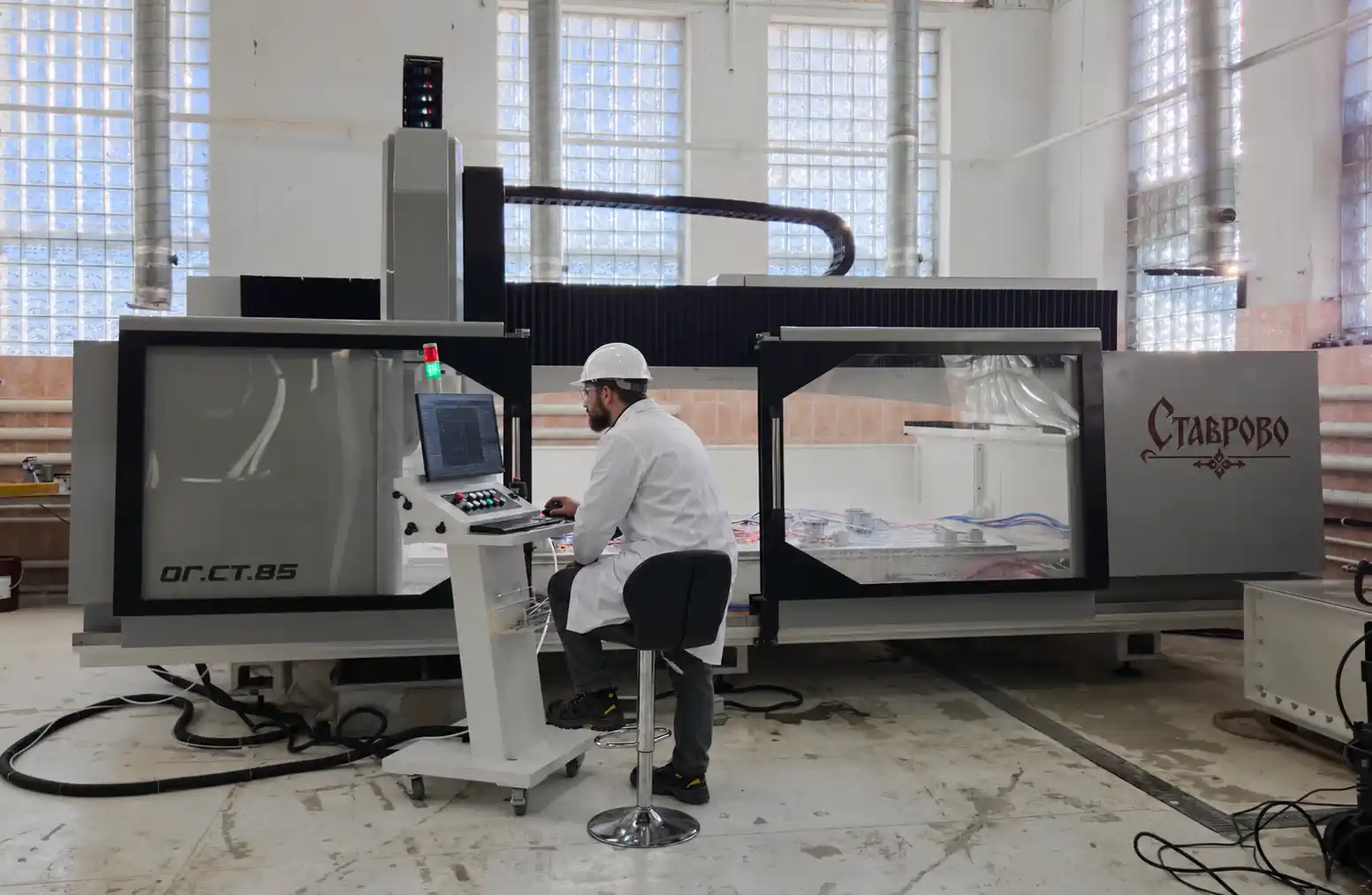
Faceting
Straight and curved bevels, edge grinding and polishing on CNC or a manual machine up to 2500×1500 mm.
Learn more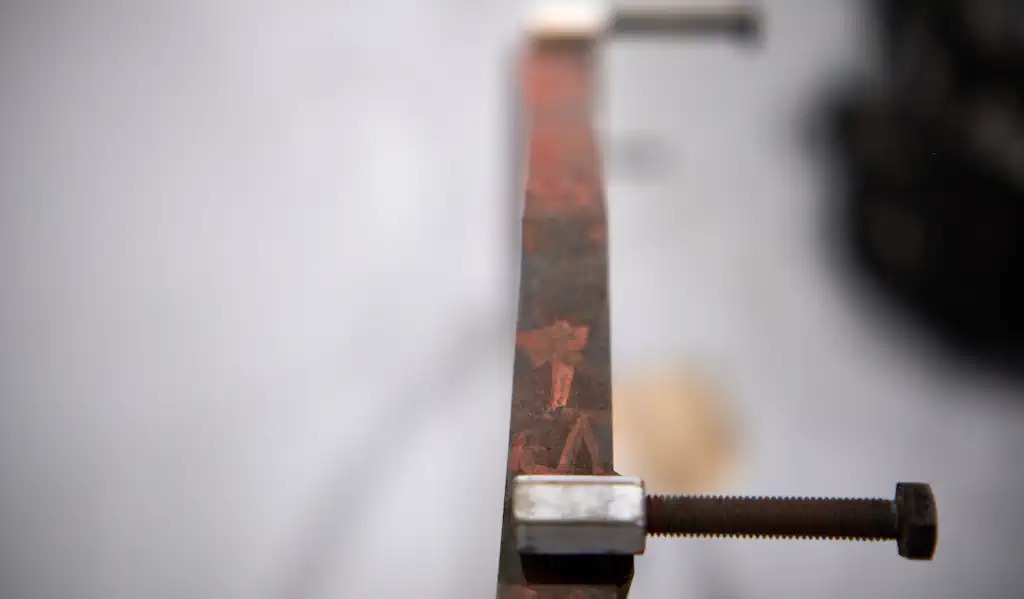
Bending molds
Perimeter tooling for gravity glass bending: design, manufacture, and geometry control.
Learn more