Lamination
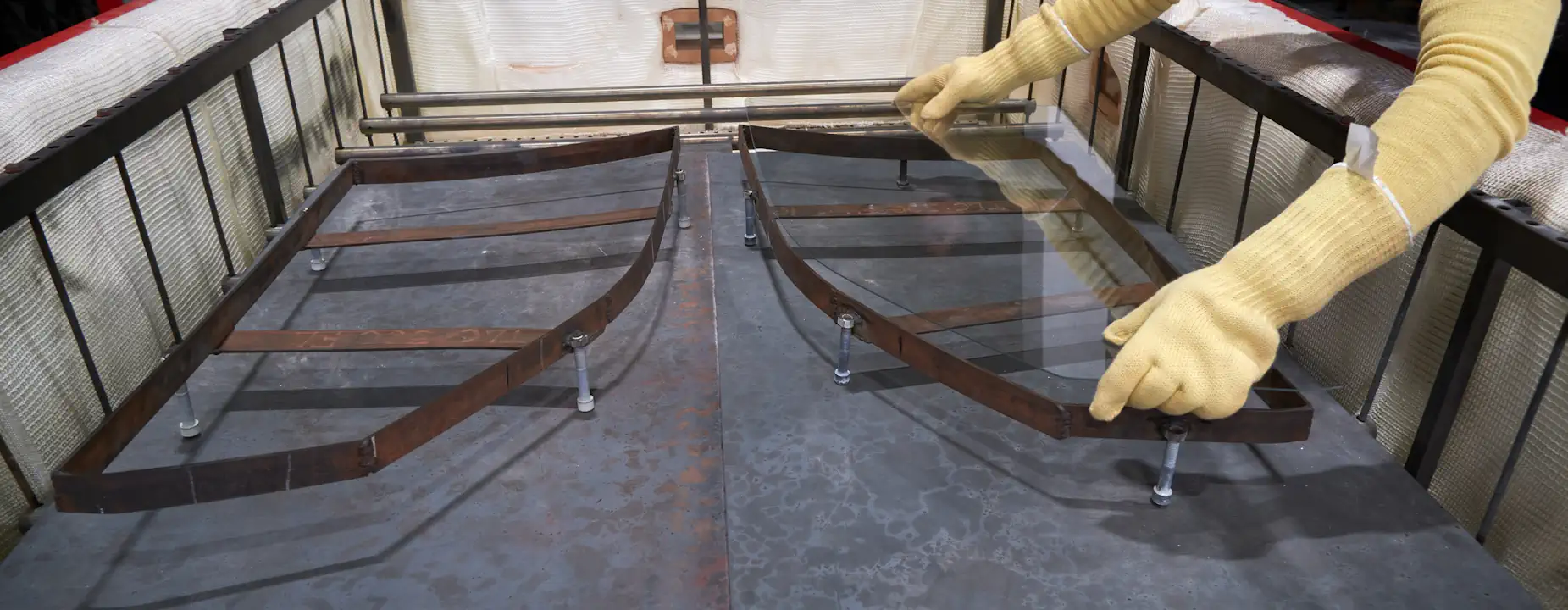
We laminate flat and bent glass on our own site: EVA and ionoplast are the baseline routes; PVB and TPU are handled as separate non-standard projects. Maximum format is 2500 × 1500 mm; the typical glass we work with is 2 mm, we laminate glass up to 15 mm thick, and above 8 mm is already a special project. High-throughput equipment delivers quality lamination even for small lots and one-off parts. Lamination packages are assembled in clean rooms with G3 air cleanliness class.

Glass lamination
Octoglass laminates flat and bent glass on our own site: we bond layers with a polymer interlayer into a multilayer construction for the agreed size, thickness, and part purpose. The service covers both one-off orders and small repeatable lots — without needing a large series “just to keep quality”.
Baseline routes use EVA and ionoplast. PVB and TPU are available, but as separate non-standard projects: terms, cycle, and fit are agreed separately, not as a catalogue default. That makes clear where the standard path ends and where dedicated engineering starts.
Working format is up to 2500 × 1500 mm. The typical glass we work with most often is 2 mm. We laminate glass up to 15 mm thick; above 8 mm the job becomes a special project — route, tooling, and checks are locked before launch, not after a failed first attempt. Flat and curved packages are assessed within the same size and thickness limits — accounting for geometry after bending.
Quality rests on equipment plus prep: a high-throughput lamination line and package assembly in clean rooms with G3 air cleanliness class. Clean assembly reduces inclusions and interface defects — especially important for optically sensitive and multilayer constructions.
For B2B and OEM work, lamination often sits mid-route: cut and edge → bending if needed → lamination → further assembly or delivery. We keep the stage with clear boundaries on format, thickness, geometry, and interlayer type so it interfaces cleanly with neighbouring steps on the Octoglass site or at the customer’s plant.
Size, glass thickness, flat or bent geometry, preferred interlayer, and package stack-up (or a short task description) are enough to start assessment. Exact pricing and timing follow once inputs are agreed; on the site we publish only confirmed capabilities — no invented tolerances or lead times without lot data.
Technical capabilities
Specific cycle regimes and package construction are agreed per part.
| Maximum format | up to 2500 × 1500 mm |
|---|---|
| Geometry | Flat and bent glass |
| Typical glass | 2 mm |
| Maximum glass thickness | up to 15 mm; above 8 mm — special project |
| Interlayers (baseline) | EVA, ionoplast |
| Interlayers (non-standard) | PVB, TPU — separate projects |
| Package assembly | Clean rooms, G3 air cleanliness class |
- Maximum formatup to 2500 × 1500 mm
- GeometryFlat and bent glass
- Typical glass2 mm
- Maximum glass thicknessup to 15 mm; above 8 mm — special project
- Interlayers (baseline)EVA, ionoplast
- Interlayers (non-standard)PVB, TPU — separate projects
- Package assemblyClean rooms, G3 air cleanliness class
Capabilities
EVA and ionoplast
Baseline interlayers for standard lamination; PVB and TPU as separate non-standard projects.
Small lots and one-offs
High-throughput equipment keeps quality stable even for single-piece orders.
Flat and bent
We laminate both flat and bent glass within the agreed format.
Thickness up to 15 mm
We laminate glass up to 15 mm; above 8 mm thickness is a special project.
How we work
01
Inputs
Drawing or dimensions, flat or bent glass, thickness, interlayer type, and lot size.
02
Prep and package assembly
Glass preparation and lamination-package assembly in a G3 clean room.
03
Lamination
Cycle on high-throughput equipment for the agreed interlayer and construction.
04
Inspection and handover
Result check and part handover or handoff to the next stage.
What we need from you
Size and thickness
Format up to 2500 × 1500 mm and glass thickness within the allowed range.
Geometry
Flat or bent glass — note the shape and radii/tooling if relevant.
Interlayer type
EVA or ionoplast; PVB and TPU as separate non-standard projects.
Package construction
Layer count, glass stack-up, and any optics or strength requirements.
Volume and route
One-off or lot; whether a follow-on stage is needed after lamination.