Painting and silkscreen
We spray-paint glass and other parts in our own paint-and-bake booth and apply ceramic silkscreen on two screen-printing machines. We work from an existing drawing or stencil, or we design the artwork, agree it, and run production. Spray painting is the final stage: the part is not processed further after it. Silkscreen uses black ceramic ink that is baked in; the glass can then be bent.
Contents
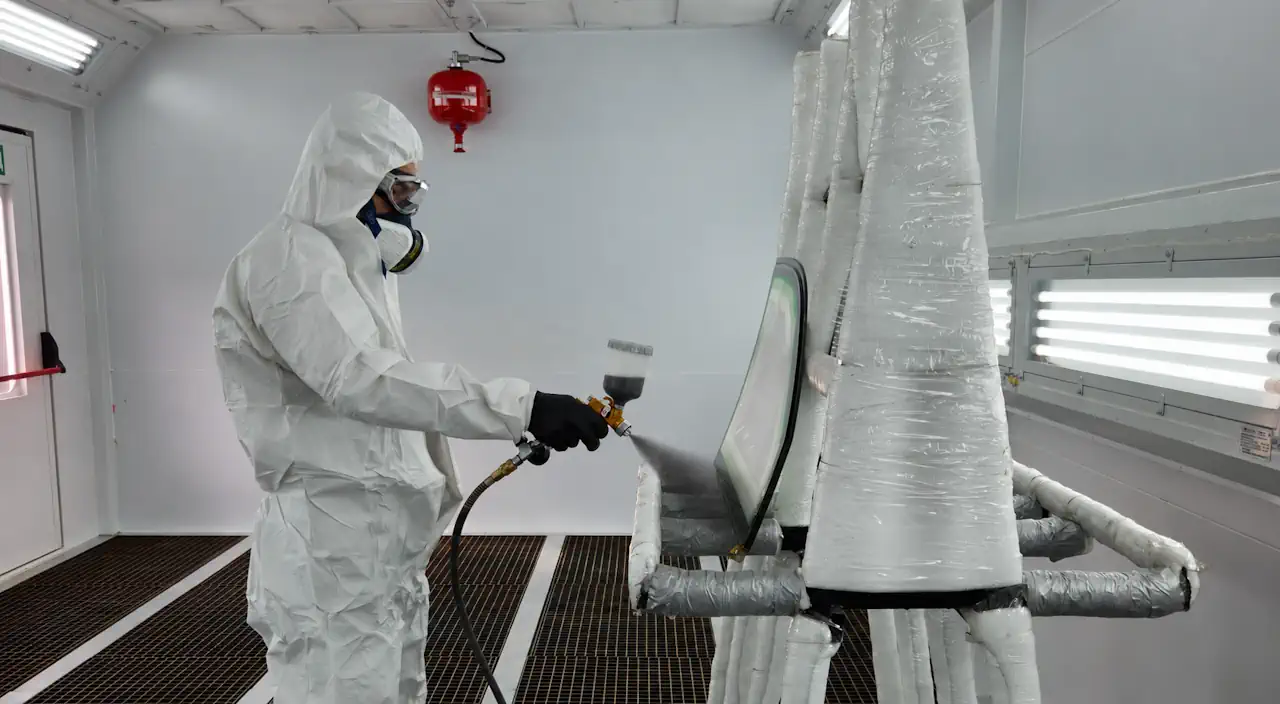
Spray painting of glass and parts
Octoglass spray-paints glass and other parts on our own site. We run a modern professional paint-and-bake booth: application and drying happen under controlled conditions, not on an open bench without a regime. That workflow suits both one-off prototypes and repeatable lots when agreed coverage zones must look the same from part to part.
The maximum part we can paint in the booth is 2.2 m × 1.0 m × 1.5 m. If a blank or assembly exceeds that envelope, we say so at assessment — not after paint prep has already started. Within the booth volume we choose hanging or support, masking zones, and spray order so the coating lands evenly without unwanted bleed onto adjacent surfaces.
An important boundary: after paint is applied, the glass is not processed further. Spray painting here is the final processing stage. If the part still needs cutting, edging, holes, faceting, or bending, those steps belong before painting. Otherwise you risk a finished coat that still needs geometry or edge work — unacceptable for a finish layer.
A typical route starts with clarity on paint zones. If paint-template drawings exist, we work from them: checking size, allowed overlaps, and open versus masked areas. If there is no drawing, we prepare one, agree it with the customer, and only then start prep. That reduces the risk of masking the wrong area “by eye” or leaving holidays in critical places.
Then the glass or part is masked, spray-painted, and dried in the booth. The output is a finished coat to the agreed template — with no promise of later mechanical touch-up over the paint. For B2B and OEM work this is a convenient finish step in a longer chain: cut and prep → other processes as needed → painting as the visual close. The earlier zones and size are locked, the shorter the path from first enquiry to stable series repeat.
A short part description, overall size, coverage zones, and a template drawing or sketch are enough to start assessment. Exact pricing and timing follow once inputs are agreed; on the site we publish only confirmed booth capabilities and stage boundaries — no invented catalogue colours or lead times without lot data.
Silkscreen printing on glass
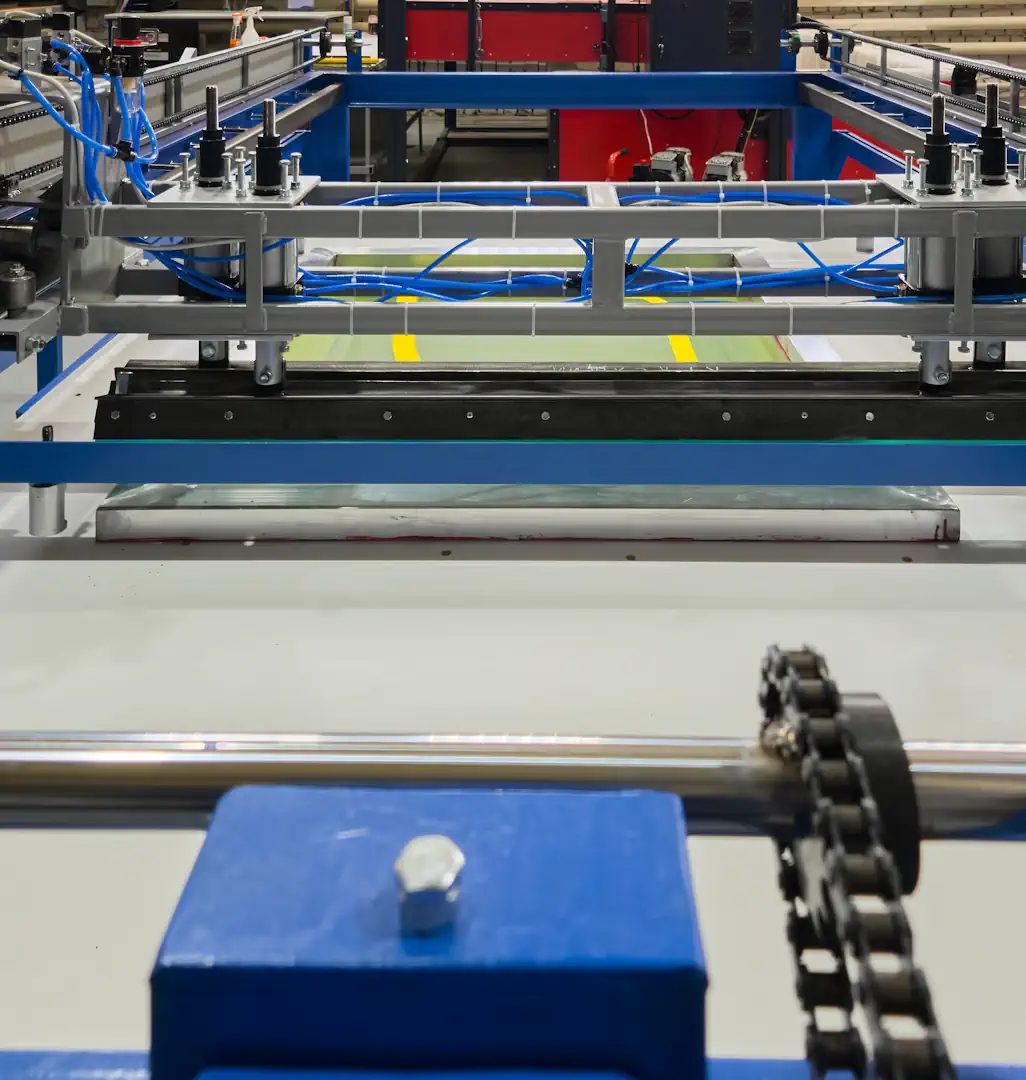
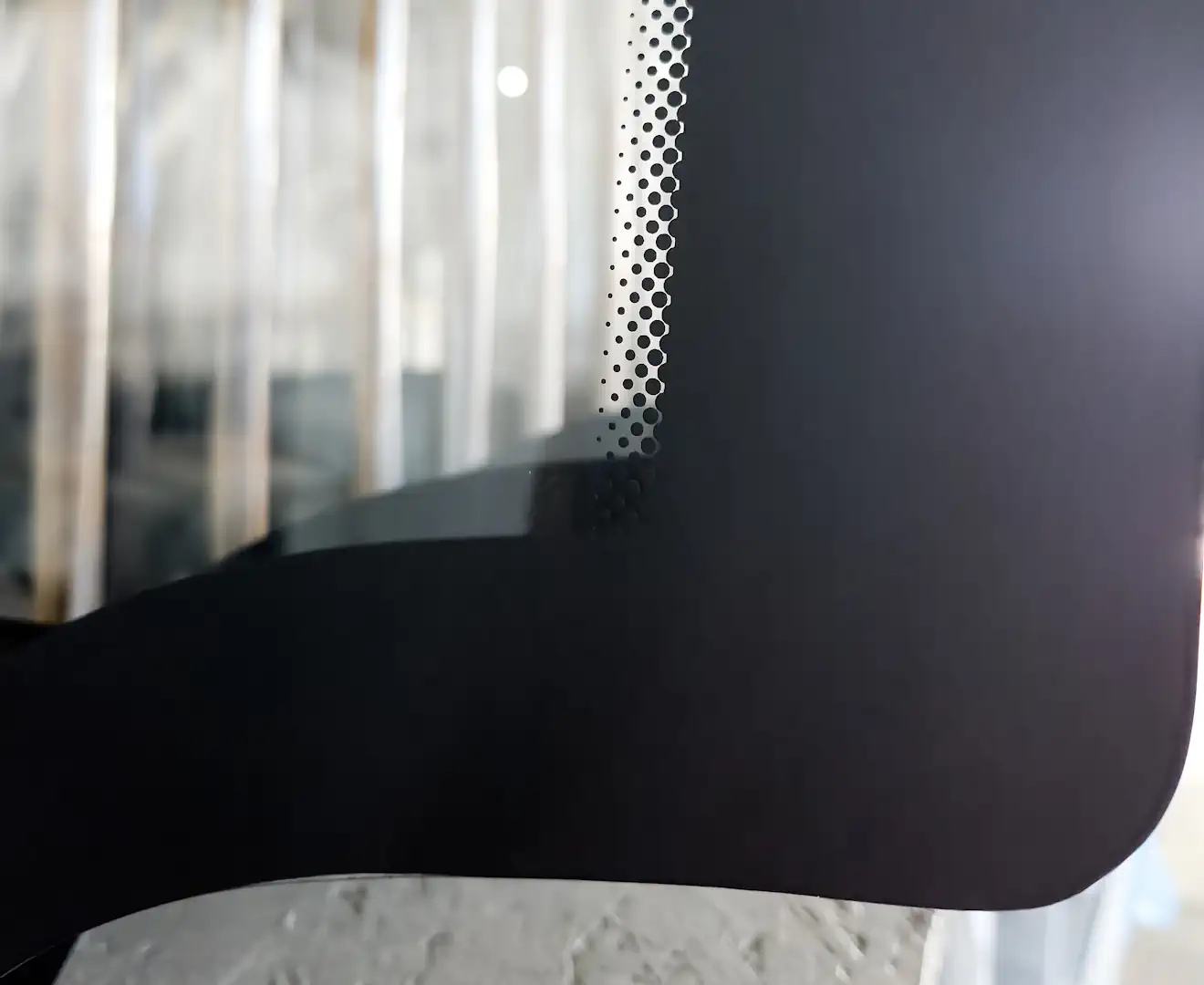
Silkscreen printing on glass at Octoglass is a production track alongside spray painting. We run two silkscreen machines and a carefully selected high-quality ceramic ink for glass. The coating colour is black. This route fits when you need sharp graphics, a frame, frits, icons, or technical zones that must stay on the glass as part of the material — not as a spray-paint decorative layer: that finish is fairly durable, but clearly more vulnerable to damage than baked ceramic.
Ceramic ink is first applied to the glass through a stencil, then baked so it fuses into the surface. The coating is highly durable: it is meant for the life of the part, not for “handle with care only”. A key difference from booth spray painting is that glass can still be bent after silkscreen. If curved geometry is still ahead, silkscreen usually comes before bending so the print rides the thermal cycle with the glass.
If the customer already has a silkscreen drawing or a ready stencil, the route is shorter: the glass is prepared, ceramic ink is applied, then baking follows. We check that the stencil matches blank size and agreed zones so the artwork does not shift or leave unprinted edges at the mask boundary.
If there is no drawing or stencil, we first make a drawing, agree it with the customer, then manufacture the stencil. Only after artwork acceptance is ink applied and baked. That order cuts rework risk: it is cheaper to fix lines and margins on paper or in a file than to find the mistake on a baked lot. For repeat parts, the agreed stencil becomes the series anchor — the next order builds on an already accepted template.
Silkscreen often links to neighbouring Octoglass services: cutting and edge prep before print, bending after bake, and multilayer assembly when black ceramic is needed as a frame or technical contour in glazing. We keep the service as a clear stage with boundaries — apply and bake to an agreed artwork — not a vague “glass décor without documentation”.
A short task description, a drawing or zone sketch, and a note on whether bending or another step follows print are enough to start the conversation. Two machines give capacity headroom and let us parallel stencil prep with printing on agreed lots once artwork is accepted and the same black contour must repeat reliably.
Technical capabilities
Specific spray colours, consumption, and timing are agreed per part.
| Maximum booth size | 2.2 × 1.0 × 1.5 m |
|---|---|
| Spray painting | Glass and other parts; final processing stage |
| Silkscreen | Ceramic ink, black; baking |
| After silkscreen | Subsequent bending is allowed |
- Maximum booth size2.2 × 1.0 × 1.5 m
- Spray paintingGlass and other parts; final processing stage
- SilkscreenCeramic ink, black; baking
- After silkscreenSubsequent bending is allowed
Capabilities
In-house booth
A modern professional paint-and-bake booth on the Octoglass site.
Two silkscreen machines
In-house silkscreen line with ceramic ink for glass.
Durable coating
Ceramic ink is baked into the glass; the coating is highly durable.
Bendable after print
Glass can be bent after silkscreen printing.
How we work
01
Inputs
A painting or silkscreen template drawing, a ready stencil, or a brief for artwork development.
02
Agreement
If needed we prepare a drawing and agree coverage zones and the process route.
03
Application
Masking and spray painting with drying, or glass prep and silkscreen with a stencil.
04
Locking the result
Drying after spray painting, or baking the ceramic ink for silkscreen.
Related stages
Cutting and processing
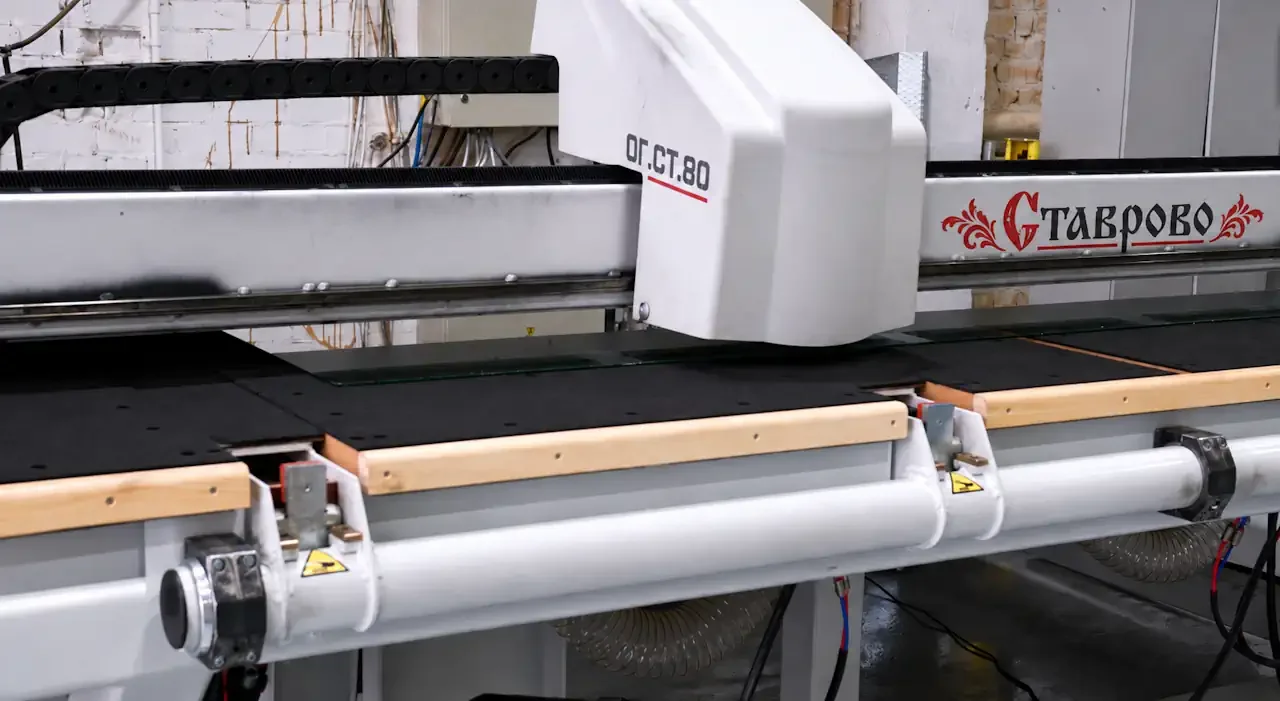
CNC cutting, edge processing, and drilling: straight and shaped cuts up to 2000×1500 mm.
Learn more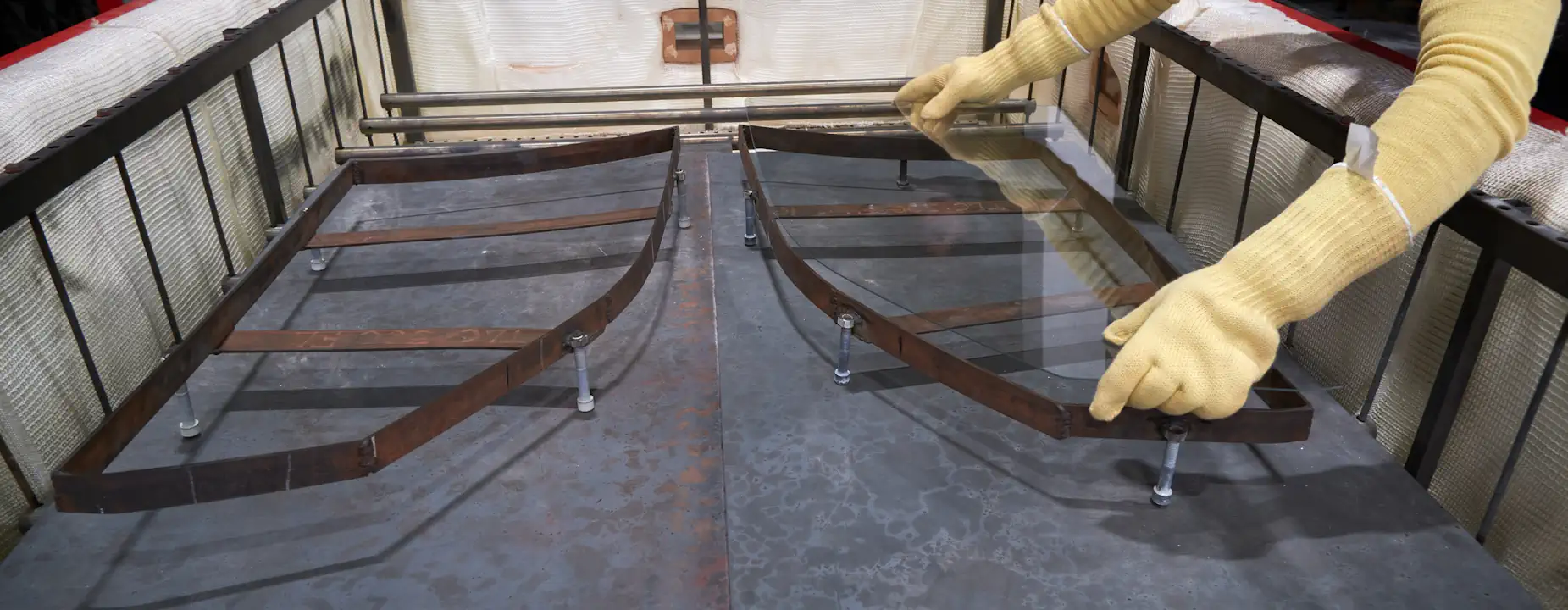
Glass bending
Gravity glass bending and plastic forming on CNC-controlled furnaces.
Learn more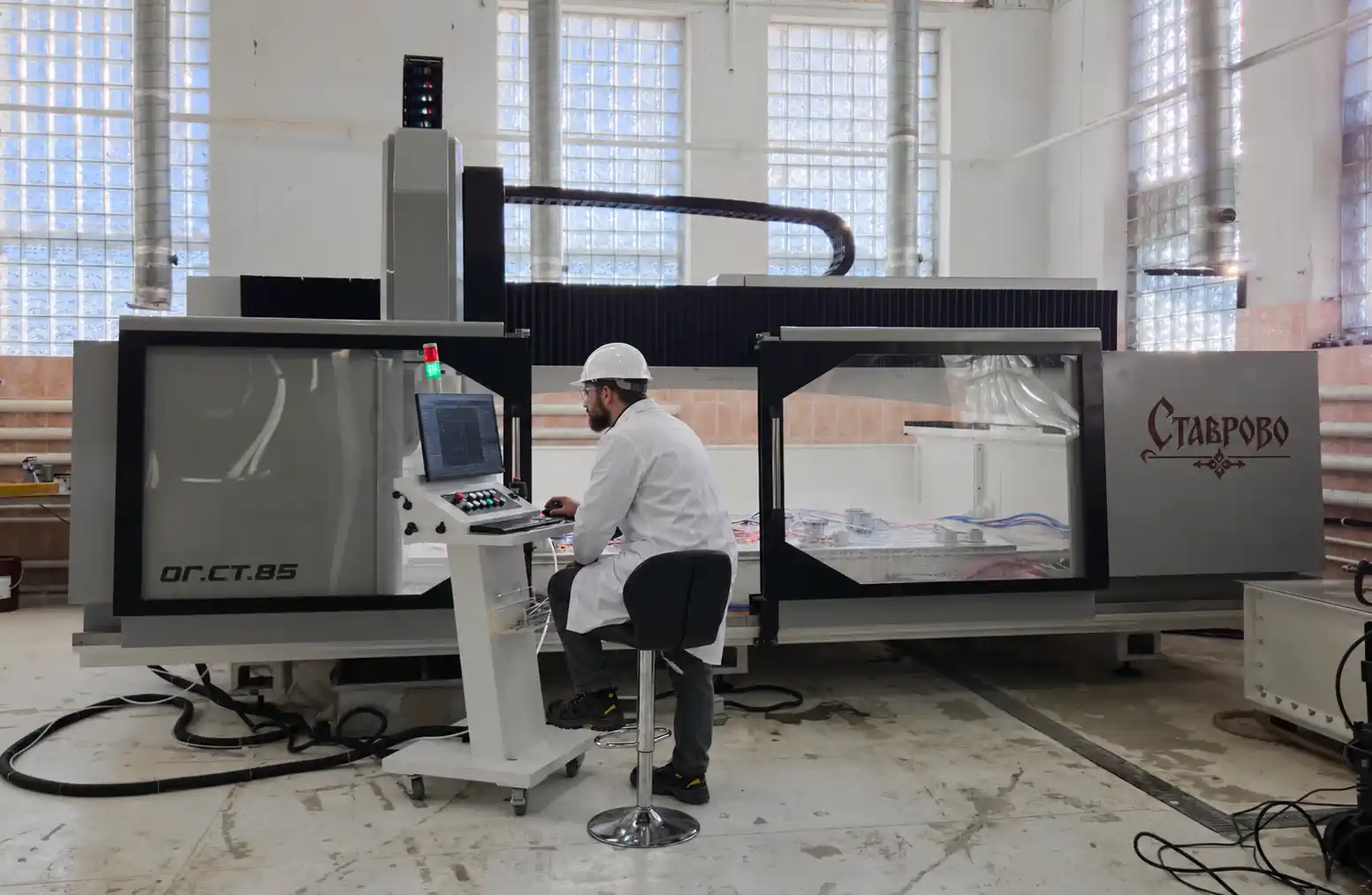
Faceting
Straight and curved bevels, edge grinding and polishing on CNC or a manual machine up to 2500×1500 mm.
Learn more