Electrochromic glass production licensing
Since 2017 Octoglass has developed electrochromic technologies and holds patented solutions — from organic and hybrid inorganic systems to control and UV protection. For glass processors we offer licensing of organic polymer electrochromic production: a technology package, product-range models and drawings, training, support, and training polymer for the first products with subsequent royalties on output. Before a licensing decision, the prospective licensee undergoes qualification assessment. Hybrid inorganic electrochromic follows a separate rollout path with PVD R2R equipment and a different launch economics.
Contents
Organic polymer electrochromic
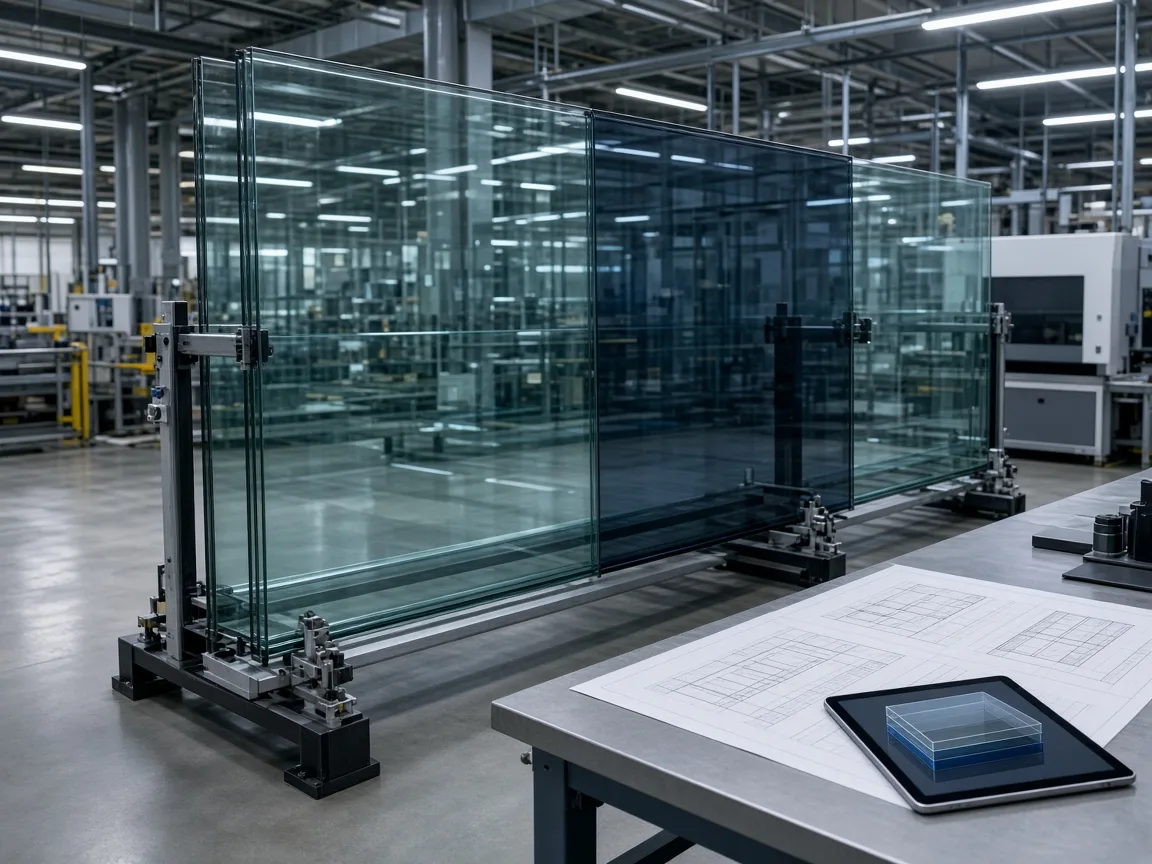
Since 2017 Octoglass has developed electrochromic technologies and built a portfolio of patented solutions: organic electrochromic systems, hybrid inorganic constructions, control systems, UV protection, and related work. For glass processors the primary license path is organic polymer electrochromic: transferring the technology onto a site that already works with glass and holds a baseline equipment fleet.
The license opens access to a technology package, models and drawings for the manufactured product range, training at Octoglass plants, technical and process support, and training polymer for the first electrochromic products. Manufactured products are subject to royalty — the model is built for long-term support, not a one-off “know-how sale without ownership”.
Before a licensing decision, the prospective licensee undergoes qualification assessment. Making electrochromic glass is a demanding process: quality requirements are roughly two orders of magnitude stricter than the industry average. Assessment checks whether the site is ready for that discipline — people, route, and control — not only the wish to “add smart glass to the price list”.
If there is a willingness to implement qualified management processes, Octoglass can help set them up and roll them out — alongside assessment and license prep, not instead of them.
A key difference of the organic polymer path: launch does not require a separate fleet of narrowly specialized expensive equipment. About 85% of process operations are covered by what glass processors already have. The estimated cost of organizing electrochromic glass production on an existing plant starts from RUB 15,000,000. That figure is a planning guide; final investment and any add-on equipment are agreed after assessment and route review.
For the customer that means a clear fork: not building an EC plant from scratch, but embedding the technology into working glass processing — provided production culture can hold the process requirements. We keep expectations honest: the license delivers the package and support, but does not replace the licensee’s discipline on the line.
Hybrid inorganic electrochromic
Alongside organic polymer electrochromic, Octoglass develops a hybrid inorganic path. That is a different technology class and different rollout economics: a typical glass-processor fleet is not enough — expensive PVD R2R equipment and matching process infrastructure are required.
The estimated cost of deploying hybrid inorganic electrochromic is about USD 50–60 million. The order of magnitude reflects line capital intensity, not a “license markup”: without PVD R2R the route cannot close physically. That is why we treat the hybrid path separately from organic — as a strategic investment project, not a quick upgrade of an existing line.
For a prospective partner it matters to see the fork early. Organic polymer electrochromic is built for licensing existing glass-processing plants with assessment, training, and royalty. Hybrid inorganic suits sites ready for large capital spend and a different process loop. We help match the goal, investment horizon, and fit of each route before timing and budget expectations lock in.
If the interest is specifically hybrid inorganic electrochromic, the conversation starts with the site profile, PVD R2R availability, and target volume. Package details, rollout stages, and commercial terms are agreed per project — without blending the two technologies into one “average” offer.
How we work
01
Enquiry and plant profile
Site profile, equipment, and the goal of launching EC production.
02
Qualification assessment
Assessment of production culture and readiness for EC process requirements.
03
License and package transfer
Access to technology, models/drawings, training, and training polymer.
04
Launch and support
Technical and process support; royalty on manufactured products.
What we need from you
Active glass processing
A site and baseline equipment for most organic EC operations.
Readiness for assessment
Willingness to complete qualification before a license decision.
Launch goal
Organic polymer EC or a hybrid inorganic path with PVD R2R.
Financial capacity
Resources for a launch estimate (organic EC) or a capital-intensive rollout (hybrid EC).
Related stages
R&D / research / small series
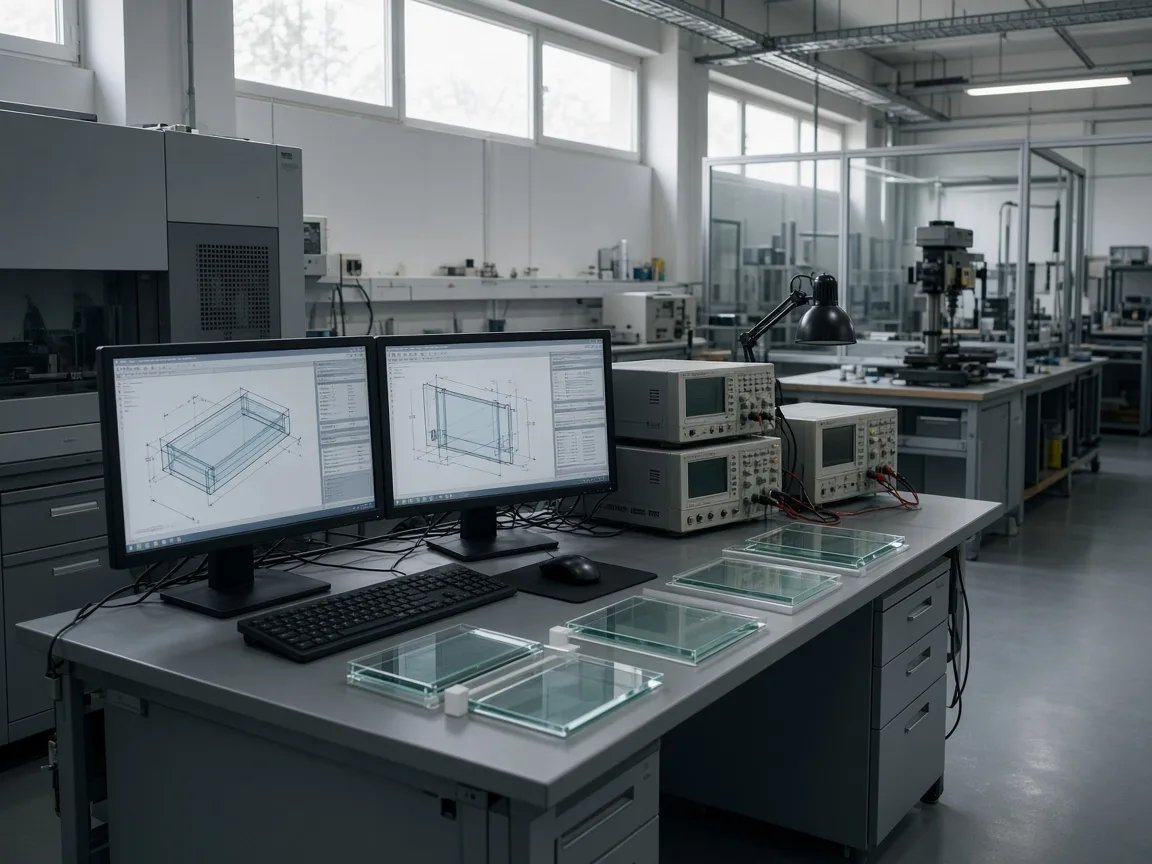
R&D and applied research on electrochromic systems and glass processing, plus small-series production.
Learn more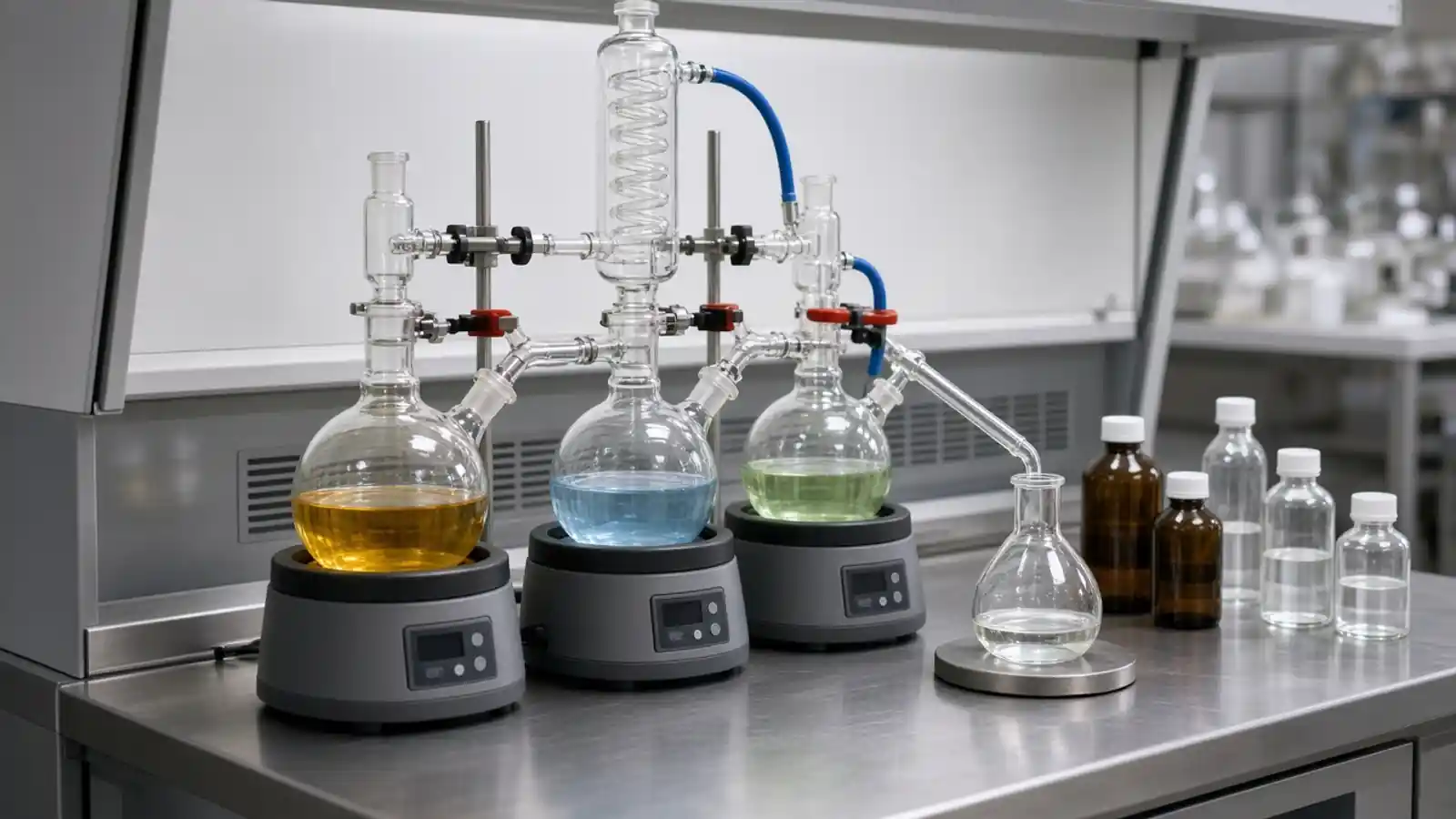
Chemical synthesis & purification
Custom synthesis, overseas supply, and propylene carbonate purification on our own equipment.
Learn more
Equipment
Equipment for glass processors.
Learn more