Chemical feedstock synthesis and purification
We prepare chemical feedstock for your task: custom synthesis, overseas procurement, and propylene carbonate purification on our own equipment — with stock kept on hand.
Contents
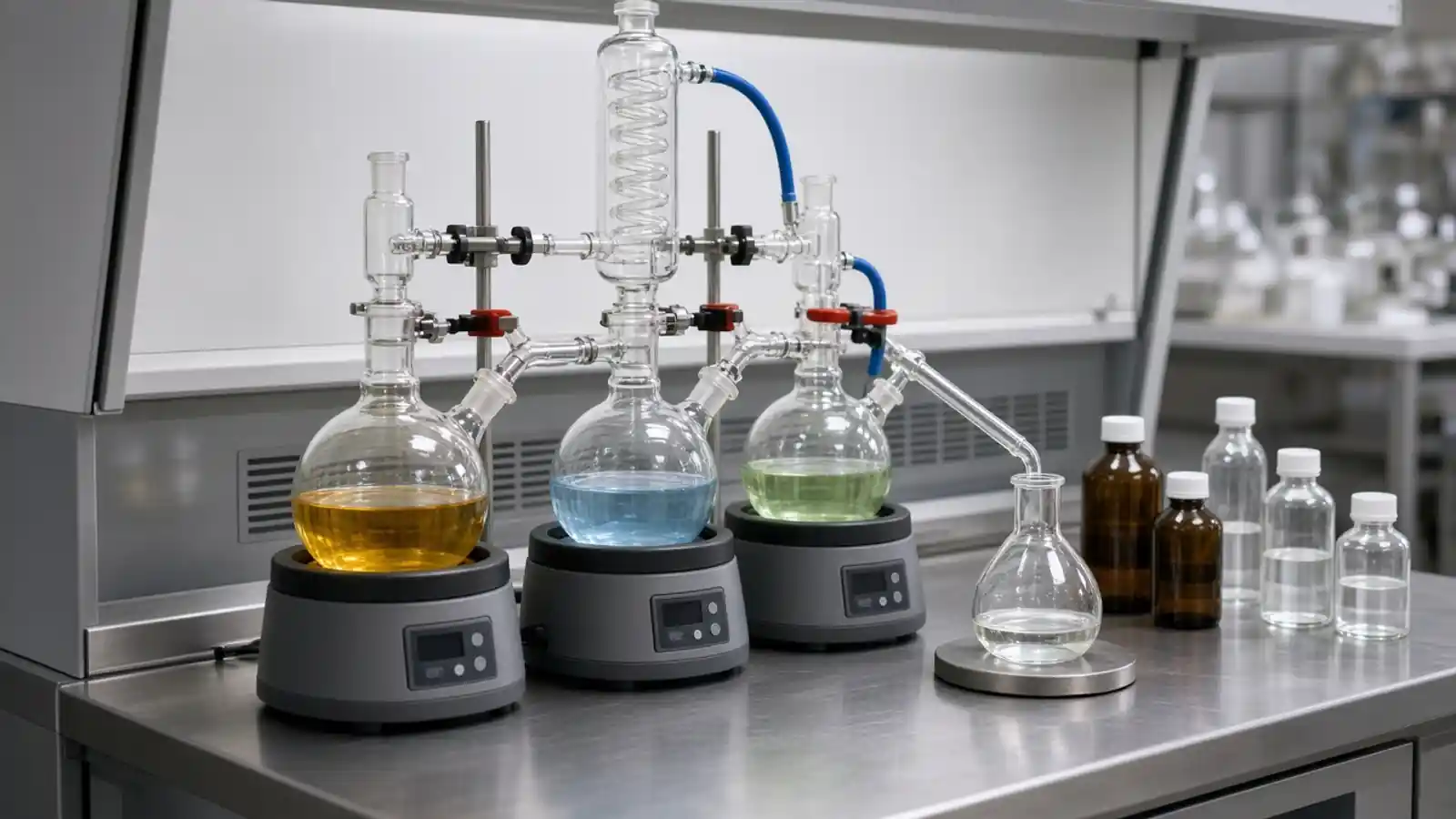
Custom chemical synthesis
Octoglass synthesizes chemicals to order — when the compound you need is unavailable in the right volume, purity, or lead time, or when reproducibility for your process matters. We support laboratories, pilot lines, and small production batches: from clarifying structure and target metrics to delivering agreed material.
A typical request starts with a clear specification: what must be obtained, for which use, and under which constraints. CAS or other identifiers, desired volume, purity requirements, acceptable impurities, delivery form, and timing all help. If some details are still open, we help shape a brief so the synthesis is feasible and the output is checkable.
Custom synthesis is not a universal reagent catalogue. We take work that fits our expertise and equipment, or where the route becomes clear after a short review. For electrochromic and related systems, feedstock is often sensitive to moisture, oxidation, and trace impurities — so synthesis and follow-on purification are planned together, not as disconnected steps.
We then agree batch size, storage conditions, and packaging. If the substance will be needed again, we lock a reproducible route so later batches move faster. For one-off lab amounts and for pilot work the logic is the same: clear specification first, then an executable route and controlled material handover.
Overseas chemical feedstock supply
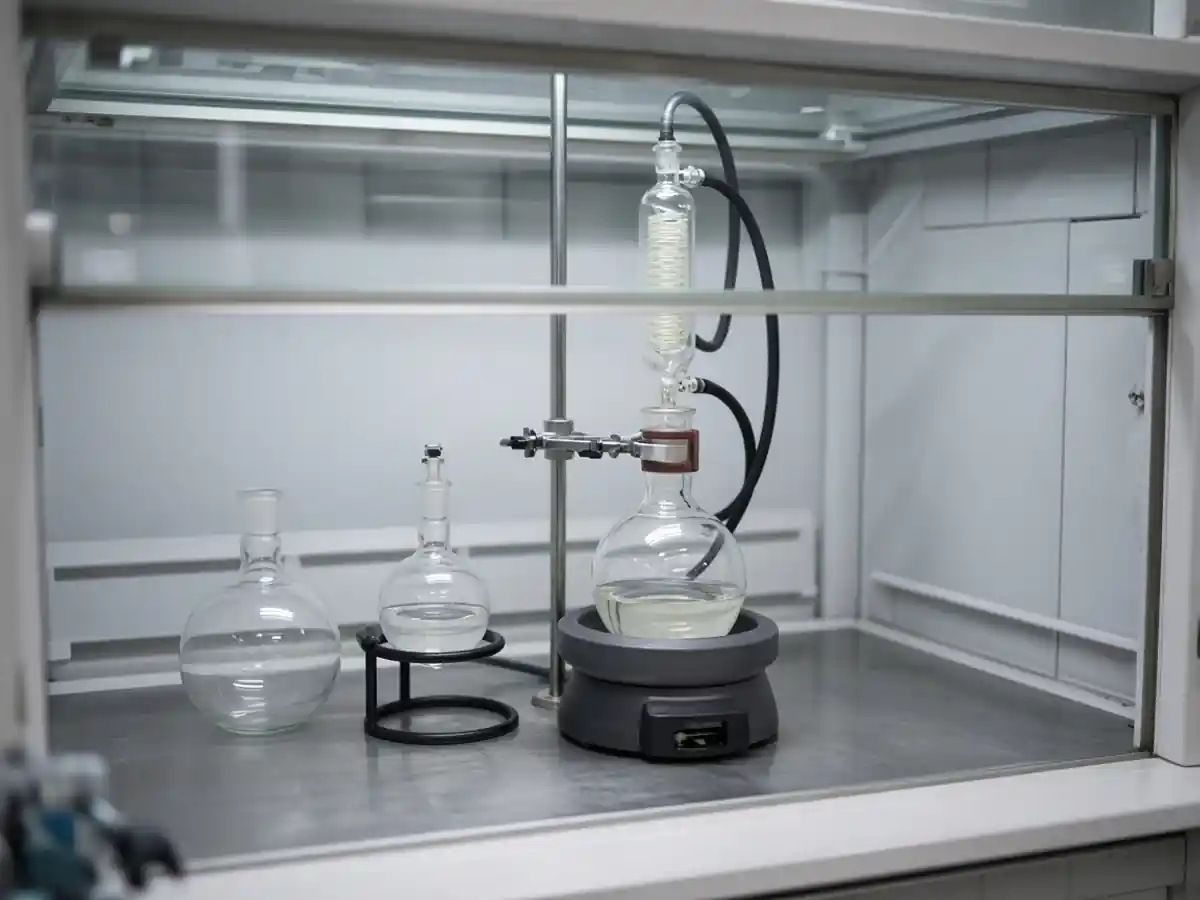
When a substance is already manufactured but hard to buy locally — in the right grade or within an acceptable lead time — we arrange overseas chemical supply to order. This sits alongside in-house synthesis: sometimes it is faster and more rational to source a proven supplier and deliver material to you than to run a full synthesis from scratch.
We draw on knowing which feedstock electrochromic compositions and related work actually need, and on supply experience where price and timing matter less than lot origin, storage conditions, and the ability to reorder. Upstream inputs match synthesis: substance identifiers, volume, quality requirements, timing, and use constraints.
Supply “to order” does not mean an endless warehouse of rare reagents. We assess market availability, logistics, and fit to your specification. If import is impractical or unstable, we say so and propose an alternative — synthesis, a close analogue (if your brief allows), or purification of available technical-grade material.
Once terms are agreed, we cover the path from supplier confirmation to batch handover. That reduces the risk of buying blindly through a random intermediary: you get a clear accountability path and can discuss quality before the material enters your process. Large and small volumes are handled separately — route and timing depend on the substance and country of origin.
Purified propylene carbonate
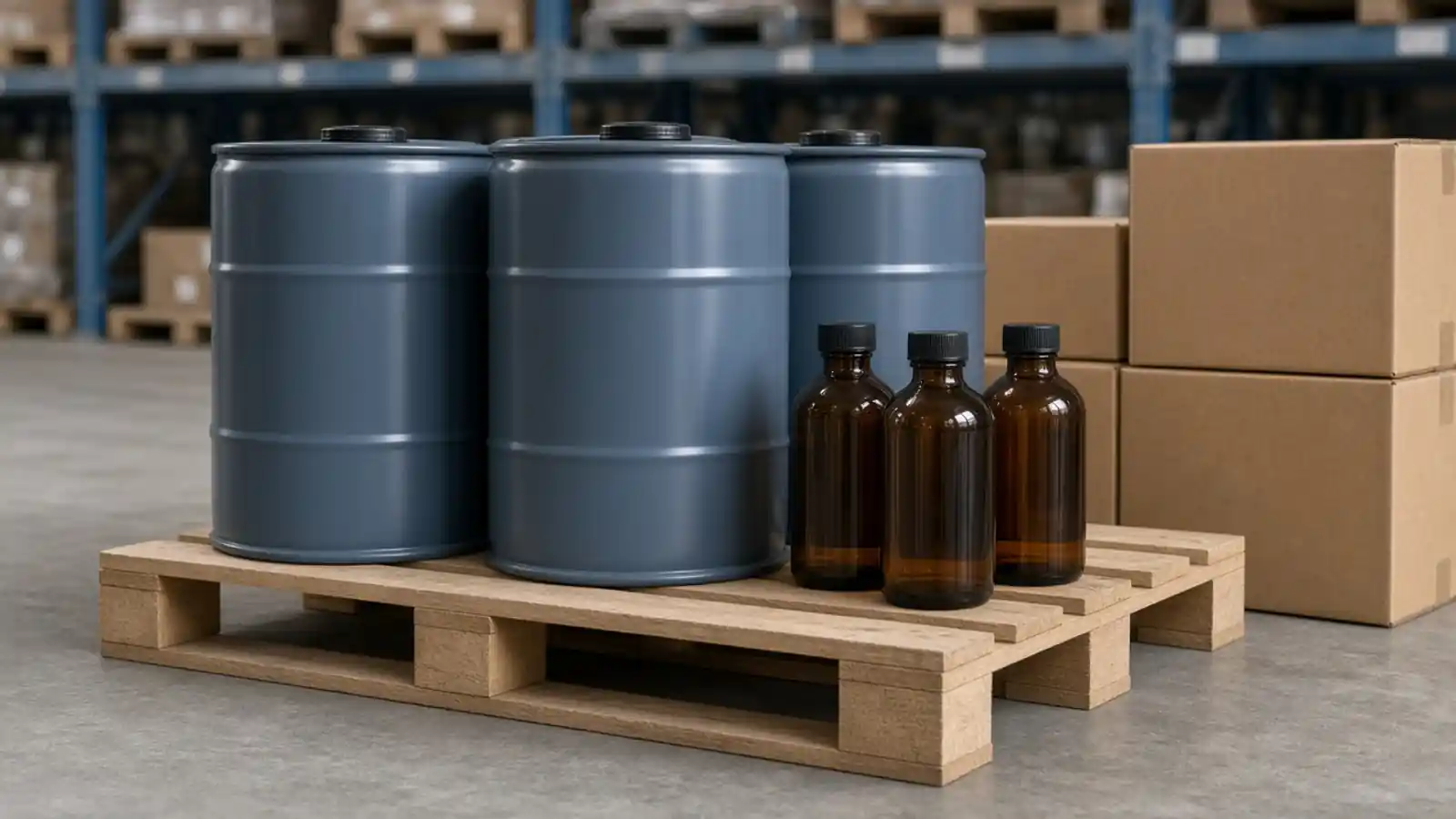
We purify propylene carbonate on Octoglass equipment and keep it in stock. For electrochromic systems and lab work, a solvent with controlled purity is often needed regularly — so this product is singled out: you do not have to wait on an overseas shipment when current stock covers the volume.
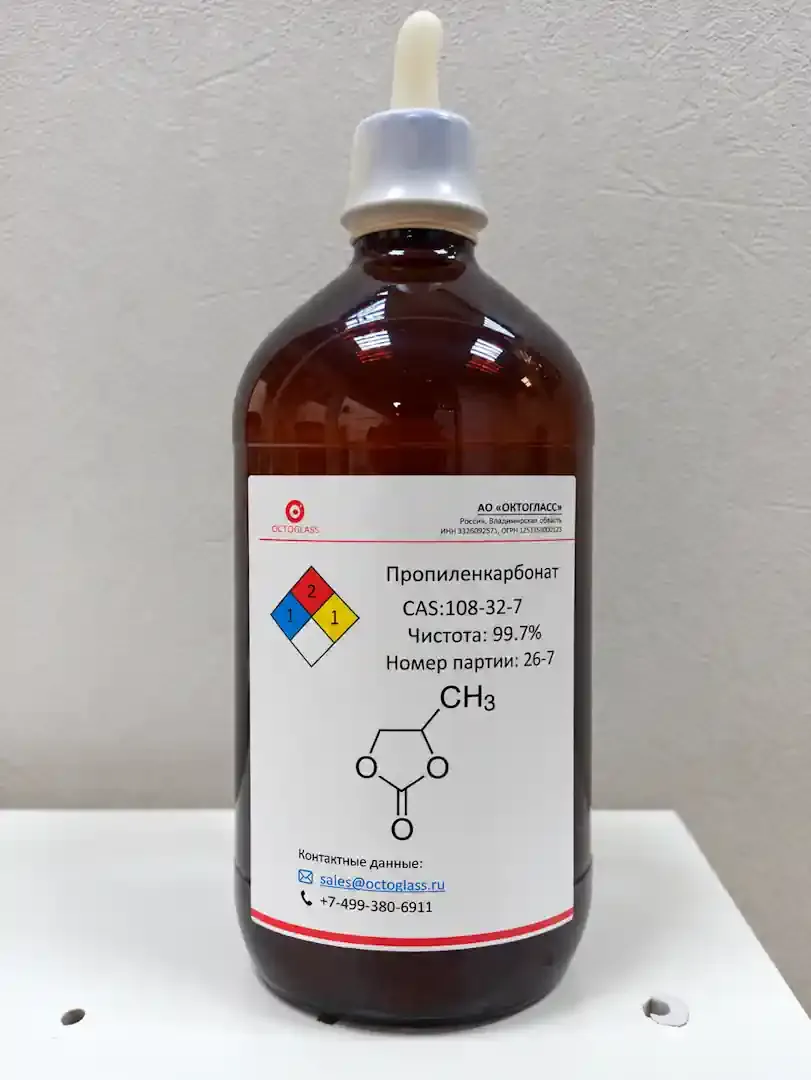
The substance is identified as CAS 108-32-7; reference codes: ChemSpider 7636, ECHA 100.003.248, PubChem CID 7924, UNII 8D08K3S51E. If you cross-check catalogues or regulatory databases, include these identifiers in your enquiry so we can confirm we are talking about the same compound.
The minimum batch is from 1 litre. Depending on volume, propylene carbonate ships in amber bottles, with sieves, hermetically sealed — packaging chosen to reduce moisture uptake and contamination in storage and transit. Small lab volumes suit ready bottles; larger batches get packaging and ship terms agreed separately.
In-house purification keeps the cycle short: enquire → confirm stock/timing → ship. If you need a volume well above stock or special quality targets, we will discuss a purification and delivery schedule up front. Related tracks — synthesis of other components and import of companion feedstock — can sit in one request when you are assembling a material set for an experiment or pilot.
Identifiers and supply
| Substance | Propylene carbonate (purification, stock) |
|---|---|
| CAS | 108-32-7 |
| ChemSpider | 7636 |
| ECHA | 100.003.248 |
| PubChem CID | 7924 |
| UNII | 8D08K3S51E |
| Minimum batch | from 1 L |
| Packaging | Amber bottles, with sieves, sealed (depends on batch size) |
- SubstancePropylene carbonate (purification, stock)
- CAS108-32-7
- ChemSpider7636
- ECHA100.003.248
- PubChem CID7924
- UNII8D08K3S51E
- Minimum batchfrom 1 L
- PackagingAmber bottles, with sieves, sealed (depends on batch size)
Pricing
| Propylene carbonate, chemically pure (ХЧ) | $163 per litre, supplied with sieves |
|---|---|
| Third-party PC batch purity analysis | $142 |
- Propylene carbonate, chemically pure (ХЧ)$163 per litre, supplied with sieves
- Third-party PC batch purity analysis$142
How we work
01
Request and specification
Substance name, CAS (if known), volume, purity, and timeline.
02
Route: synthesis / supply / purification
We choose a feasible path: in-house synthesis, import, or stock purification.
03
Agreement and fulfilment
Batch terms, packaging, and handover timing.
04
Shipment
Sealed packaging sized to the batch; for propylene carbonate — amber bottles with sieves.
What we need from you
Substance and identifiers
Name, formula, CAS / other codes — whatever is known.
Volume and purity
Required batch size and quality requirements.
Timeline and use
When feedstock is needed and for which use (lab, pilot, series).
FAQ
What does the chemical feedstock service include?
Is propylene carbonate always in stock?
What is the minimum propylene carbonate batch?
What information do you need to assess a request according to provision of chemical agents?
Can we discuss the task before a formal request?
Related services
R&D / research / small series
R&D and applied research on electrochromic systems and glass processing, plus small-series production.
Learn more
EC production licensing
Licenses for organic polymer and hybrid inorganic electrochromic production for glass processors.
Learn more
Equipment
Equipment for glass processors.
Learn more