“Smart glass” is gradually but steadily entering everyday life. Its range of applications keeps expanding. Many types of smart glass are used across different fields. First of all, this includes building glazing — exterior and interior — from shopfronts to office partitions. Transport is not left out either: not only cars, but also aviation — the modern Boeing Dreamliner is a well-known example. In marine transport, smart glass is widely used not only on vessels in tropical regions with year-round sun, but also in Arctic zones, where protection is needed from blinding sunlight reflected by ice and snow in summer. Controllable filters for control systems, observation, and augmented reality barely need mentioning. In other words, smart glass is used wherever glass itself is used. But there are many smart-glass options, and each has its niche.
Main smart-glass technologies
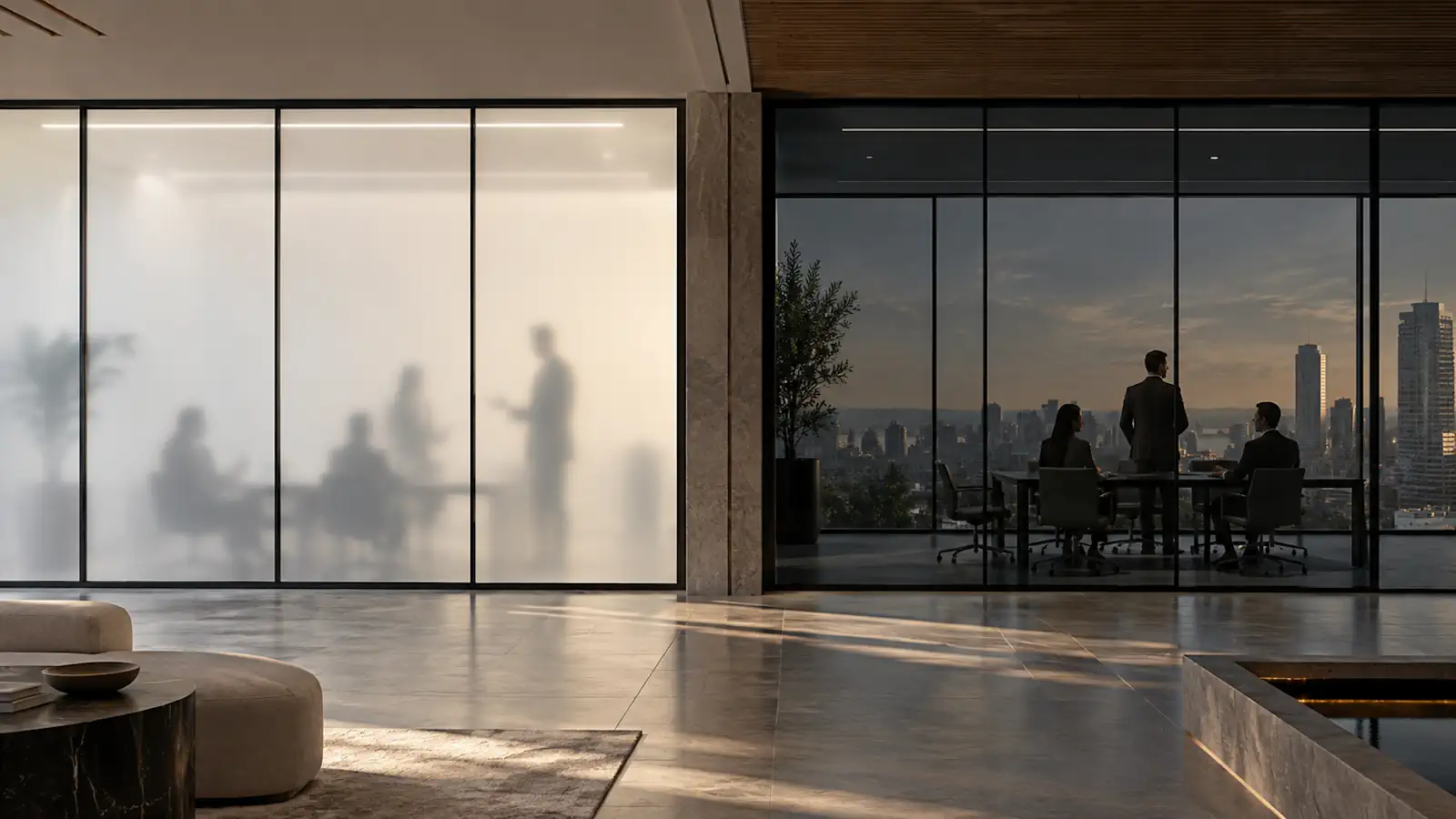
For example, glass or film based on polymer-dispersed liquid crystals (PDLC) is widely used when privacy is needed but there is no requirement to change light transmittance itself. PDLC glass can become opaque through scattering — it still transmits light, but you cannot make out what is happening on the other side. Switching takes a few tenths of a second — faster than the human eye can catch.
Another type of smart glass uses “nano-blinds” distributed in a polymer matrix: SPD technology (from Suspended Particle Device — a device based on particles evenly distributed in a medium). It finds similar uses to PDLC, but is applied where the glass must be tinted or cleared on demand while controlling the insolation it allows through.
SPD and PDLC are good examples of well-commercialized smart-glass technologies that can appear in unexpected places. For example, SPD-based glass is actively used to protect rare works of art and cultural heritage that are so fragile that even bright gallery light can harm them. Such objects are placed in climate-controlled sealed cases behind tinted glass; when a visitor needs a closer look, they press a button, the glass clears, and the rare original comes into view.
PDLC glass, in turn, has been used to create glass walls separating living and bathroom areas in compact hotel rooms. When the bathroom is empty, the wall is clear and visually expands the modest room; when a shower is needed, a button press frosts the wall and isolates the bathroom from the rest of the space.
The smart-glass market is not limited to SPD and PDLC. There is also liquid-crystal (LC) technology with PDLC-like speed that can tint and clear transparent devices. In other words, it combines PDLC’s fast response with SPD’s tinting capability.
LC does not exhaust the spectrum either. Electrochromic systems (EC) work on a different principle — through electrochemical oxidation, reduction, and/or simultaneous oxidation and reduction of some of their components, or through intercalation (insertion) of donor ions, so the system takes on a color while changing light transmittance — tinting the glass.
EC glass has the greatest market potential thanks to distinctive characteristics — for example, the achievable light-transmittance range (“contrast”), where the clearest state can exceed 75% transmittance and the darkest state can approach zero transmittance.
The types above are electrically switchable: they change under electric current — light transmittance for SPD, LC, and EC, and haze level for PDLC. Other systems also exist on the market. They change under temperature or electromagnetic radiation — for example photochromic systems that tint under ultraviolet light (widely used in eyeglasses), or thermochromic systems that change color with temperature, among others. Combinations of several smart-glass types in one device are possible, as are new types with similar or even better characteristics than existing solutions.
Why low temperatures become a problem
Ambitions for widespread smart-glass use slow down when real outdoor conditions enter the picture. The primary issue is low ambient temperature.
All existing smart-glass technologies change their behavior substantially at low air temperatures — up to complete loss of function — and some devices can be damaged, sometimes irreversibly, by freezing.
The problem matters not only for transport — road, rail, marine, or aviation — but also for exterior architectural glazing. Beyond architecture and transport, smart glass is used in other outdoor technical applications. A good example is controllable filters for optical sights. Such a filter must work in a scorching desert and on a mountain glacier. In a car, smart glass is warmed by cabin heat, so the issue is less severe; an optical-sight filter has nothing to warm it — yet it must still work.
Engineers developing smart-glass technologies and finished products look for ways to improve performance in harsh winter conditions. For electrically switchable technologies, the most obvious approach is to change how the glass is powered.
As a rule, electrically switchable smart-glass technologies use materials whose conductivity falls with temperature: the lower the temperature, the higher the voltage losses across every element of the device. Eventually the voltage drop becomes critical, and device characteristics change enough for the user to notice. Switching slows, color may shift, and response may become uneven across the glass area. Changing the power scheme does not fully solve the very-low-temperature problem, and it does not apply to non-electrically switchable smart glass.
At root, smart-glass technologies rely on mobility in a medium: charge carriers move in an electrolyte; nano-blinds align with electric-field lines; liquid crystals, encapsulated in mobile polymer droplets, form or rotate in a viscous medium. As temperature falls, these media thicken and impede normal operation. So what can be done?
The Octoglass approach: additional heating of smart glass
Octoglass engineers found a way to offset the harmful effect of low temperatures on smart glass: additional heating of the smart glass.
From the earliest use of ordinary glass, people faced a drawback of glass’s relatively high thermal conductivity. Frost forms; water freezes into an ice crust; after snowfall a whole drift may sit on the glass, thaw, and refreeze firmly. Even at non-freezing Celsius temperatures, liquid water tends to condense on the surface, and the glass loses clarity — it fogs.
Different methods have been developed. A multi-chamber insulating glass unit can provide substantial thermal insulation so the outer pane is not too warm and the inner pane not too cold. But IGUs with gas or vacuum cavities cannot be used everywhere. In cars, for example, glass shape, weight, and thickness often rule out a full IGU.
Hydrophobic coatings can also be applied to reduce water adhesion. Such coatings are short-lived and easily damaged. In practice, forced heating often remains the viable option.
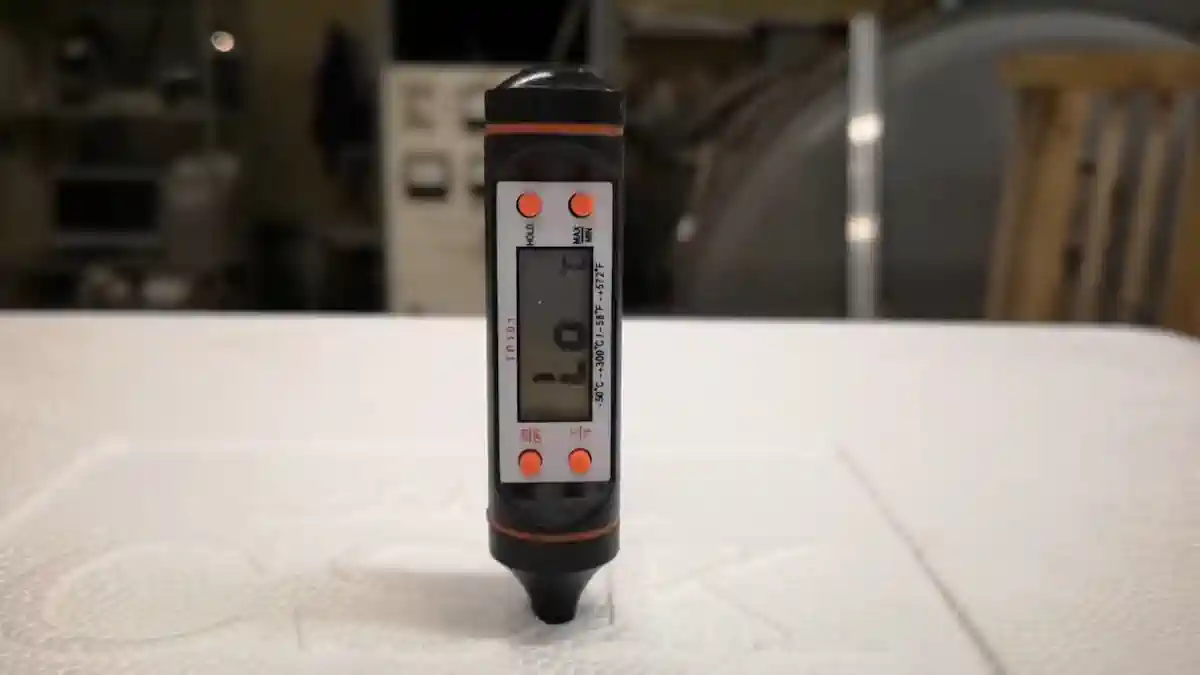
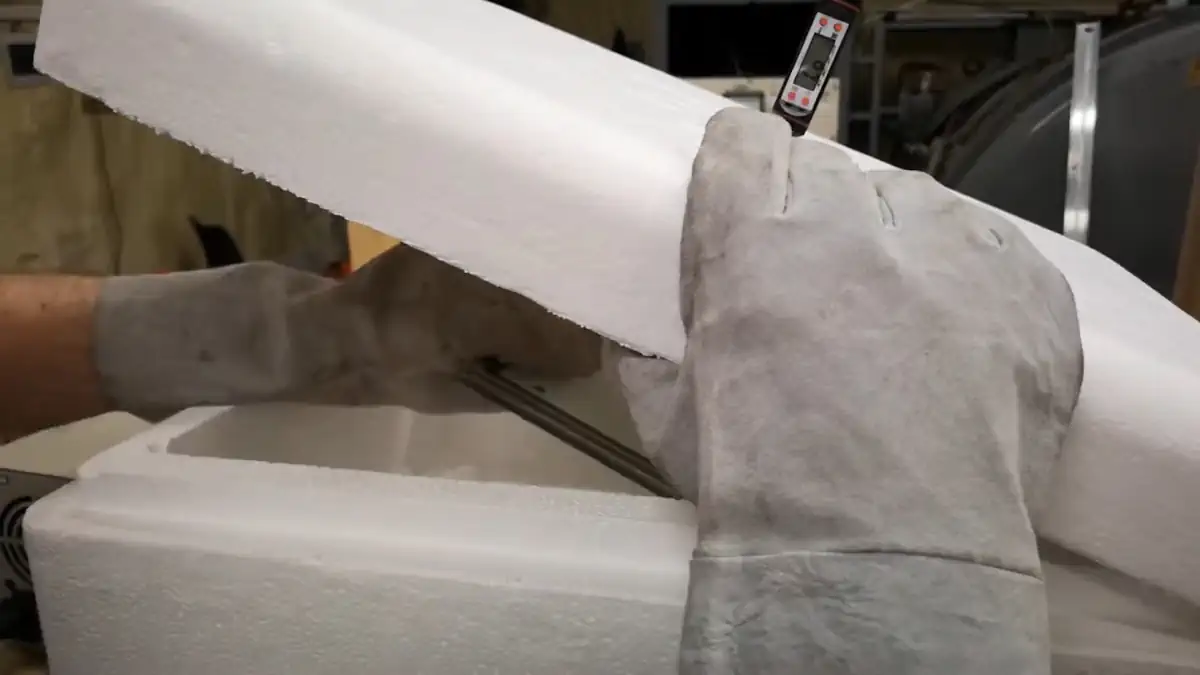
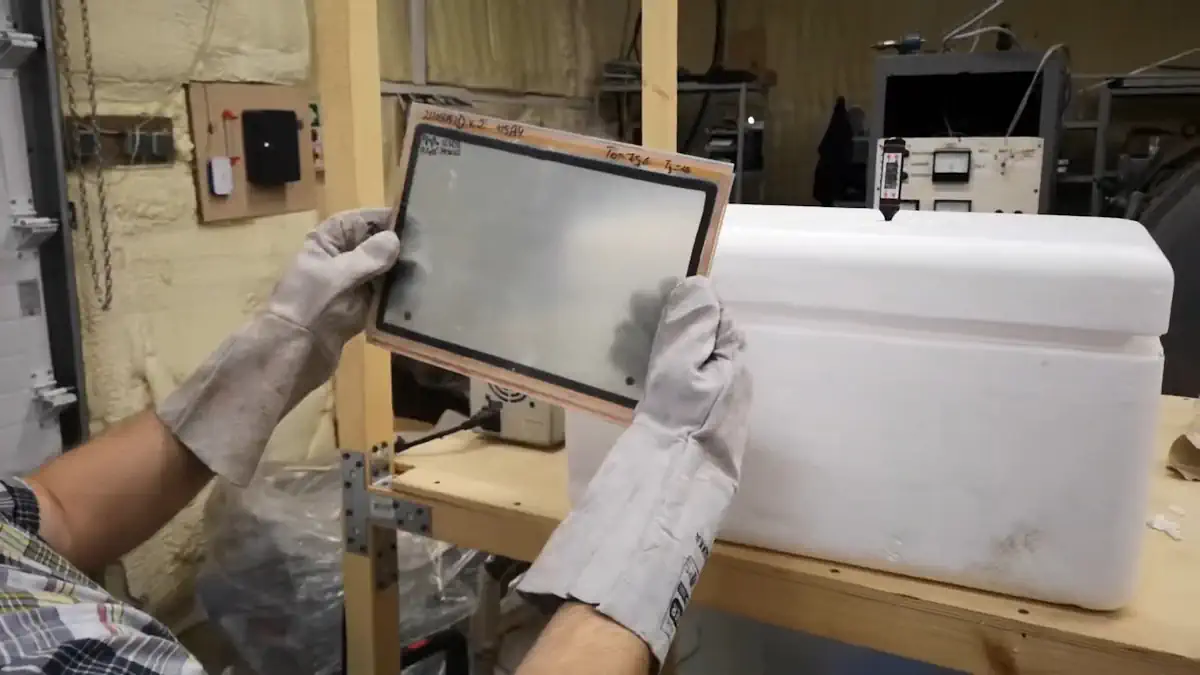
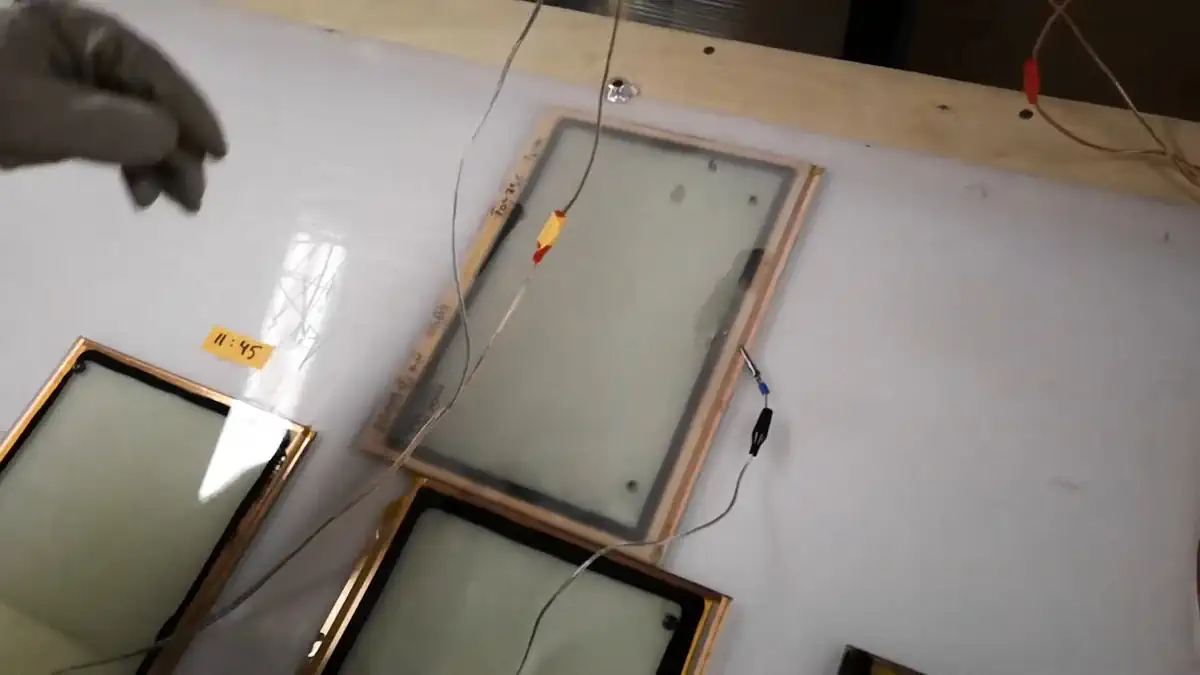
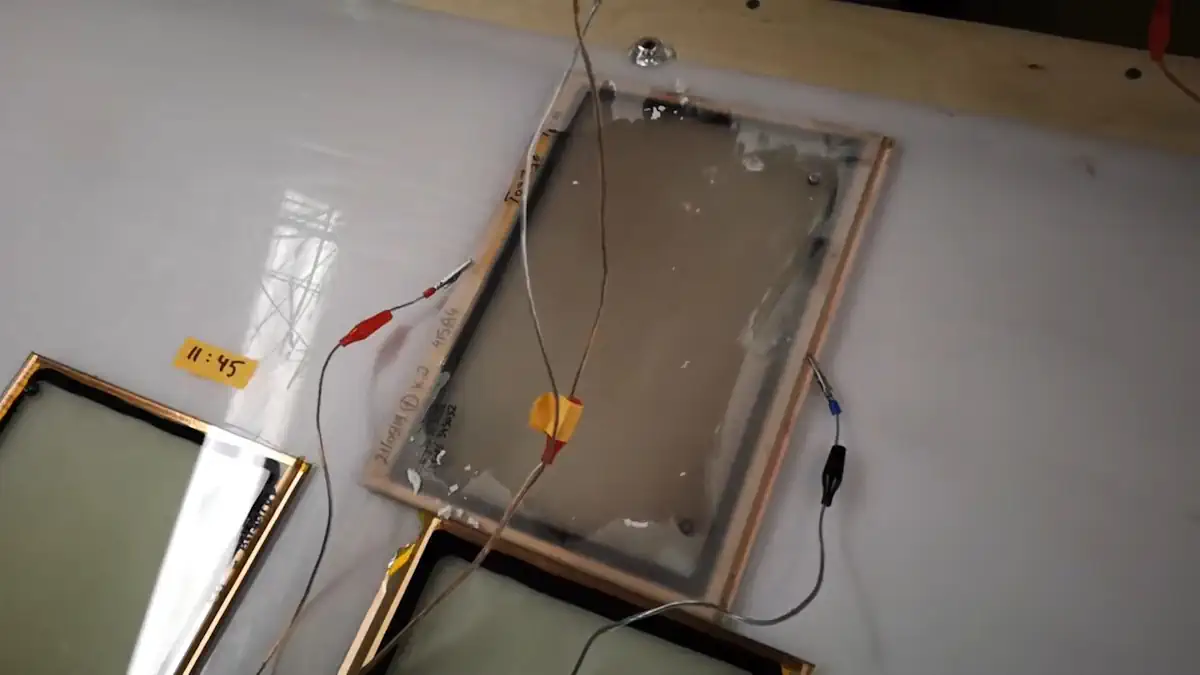
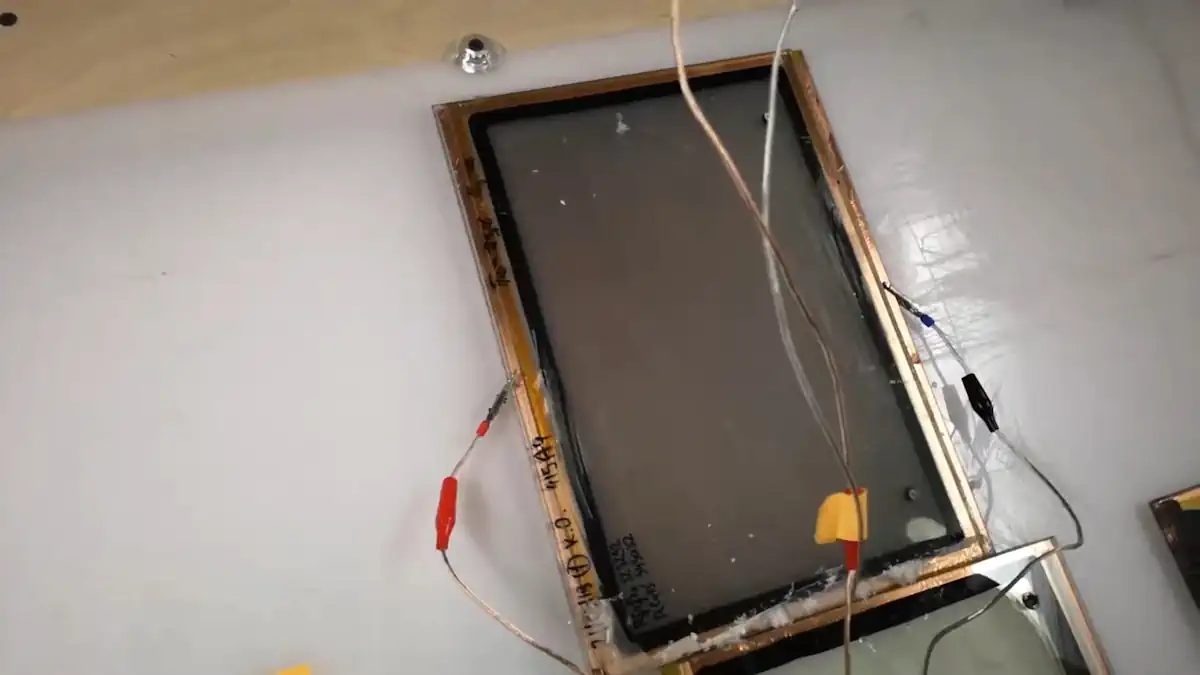
Demonstration: electrochromic glass in the cold at -78C
The frames below show a laboratory test of an electrochromic glass sample after cold exposure: the glass is covered with ice, yet controllable tinting still works.

Ways to heat glass
Heating is a simple, inexpensive way to address icing and condensation and can be done in many familiar ways. The simplest is an infrared heater in front of the glass or a continuous warm-air blow.
More advanced methods integrate heating into the glass itself. The most common is a grid of conductive material on the glass surface: when voltage is applied, the relatively high ohmic resistance heats the grid and thus the glass. Rear windows of passenger cars are heated this way.
That approach cannot be used on a windshield: the grid tracks are fairly thick and limit driver visibility. Some manufacturers therefore embed an ultra-fine wire as a sparse spiral — usually a refractory high-resistance material such as nichrome — directly into the glass structure.
This uses laminated glass, where the fine, mechanically vulnerable heating spiral is safely encapsulated in the multilayer stack. Heating covers the full area while remaining discreet: the wire diameter is so small that it is noticeable only on close inspection. Many modern cars — Ford, Rolls-Royce, Land Rover, Lincoln, and others — use such windshields.
Heating with transparent conductive coatings
Embedding heating wires into glass is labor-intensive, so other manufacturers — especially those making bullet-resistant glazing — take a different approach.
Bullet-resistant glass is multilayer, with multiple glass sheets bonded by plastic. At high protection levels thickness can reach ten centimeters or more. Warming such glass with a blower or a small infrared heater is impractical. Embedded wires also help little: thick protective glass must be kept free of exterior ice and interior fog, and too many wires would make the glass optically unacceptable.
Manufacturers found another path: one or more glass layers with a metal-oxide conductive coating — a TCO coating (Transparent Conductive Oxides). Several companies produce such glass; it is not prohibitively expensive and offers excellent light transmittance. A well-known TCO example is NSG’s TEC range (NSG owns the Pilkington brand).
Because of the thickness of bullet-resistant glass, one or more such panes are used in the laminated stack; when current is applied as needed, the glass heats evenly across area and volume.
As an alternative to coated glass, a polymer film with a similar coating can be used. Like glass, the film is laminated into the multilayer stack and heats when current is applied to the transparent TCO layer. There are no wires or other elements in the visible field, optical quality remains high, and mechanical performance is preserved.
When a large area must be heated evenly, the conductive surface is divided into sectors: laser-cut tracks isolate smaller conductive zones with feed paths.
The same track-cutting approach is used in glass interior heaters made from the same glass. Cutting tracks in the conductive surface also helps radio reception by leaving a path for radio waves. A continuous metal conductive coating screens radio frequencies well, and in some cases radio links at certain frequencies may otherwise fail.
How heating is integrated into Octoglass smart glass
In practice, when smart glass must operate across a wide temperature range including low temperatures, Octoglass uses heating integrated into the laminated stack from one or more substrates — glass or polymer film with a conductive layer.
The finished stack is laminated in a way suitable for smart glass. If the heated part is closer to the exterior face, that heating is used to melt ice and snow outside and to keep the “smart” layer at an optimal temperature.
If the heating layer is closer to the interior face, it prevents condensation on the room side and also keeps the “smart” layer at an optimal temperature.
Ordinary smart glass is multilayer but typically stays within about ten millimeters of thickness, so one heating layer is usually enough to warm the whole volume. When a “smart” layer is integrated into thick protective bullet-resistant glazing, several heating layers may be appropriate. Many manufacturing combinations exist; everything depends on the specific task and product requirements.
Controlling the heat
Beyond integrating heating into smart glass, heat control must not be forgotten. High temperature can harm smart glass — and the laminated construction as a whole.
Heating can be powered in many ways: DC or AC, pulsed current, potentiostatic or galvanostatic schemes, special voltage algorithms, and in some cases even exotic multipolar arrangements.
Temperature can be controlled with a simple temperature sensor or via changes in the electrical characteristics of the heated layer: as the layer’s temperature changes, so does its resistance.
Because Octoglass specializes in smart glass, we already drive the “smart” part with a dedicated controller and integrate that controller with the heater controller. This makes it possible, first, to automate heating when needed and, second, to keep optimal conditions for the smart interlayer. The result is an optimal operating temperature regime for smart glass in harsh cold climates.
When additional heating is truly necessary
Adding heat not only complicates the finished product but also raises its cost. Customers often ask how our smart glass will work in winter on a vehicle used in harsh Siberian conditions, where −40 °C and lower are common — places where spit can freeze before it hits the ground.
We tell clients that at −40 °C and below they will not be using smart glass in practice: unless the vehicle is kept in a warm garage or left running while parked, it often will not start. And if it does start, it may not move, because the transmission and tires can freeze beyond usable limits.
With the engine running and the cabin warm, smart-glass temperature is already in a normal operating range. Some customers still want more, and for them we implement additional heating.
There are also cases where heating integration is simply required — for example, locomotive cab glazing on rail transport. Then safety comes first, and cost or construction complexity are secondary.
Conclusions
There are many kinds of smart glass based on different technologies, each with primary application areas tied to key characteristics. Sometimes switching speed matters most; sometimes maximum contrast; sometimes maximum privacy.
All smart-glass types, in one way or another, struggle across a wide temperature range — especially at low and very low ambient temperatures. Low temperature not only worsens finished-product performance but can also cause partial or complete degradation of the smart glass.
One of the most effective responses is heating smart glass to its normal operating temperature. Heating methods range from warm-air blowers to heating elements integrated into the glass.
In our view, the most suitable way to heat smart glass is metal-oxide conductive coatings on glass or polymer film. Current is applied to the conductive layer, the glass heats to the required temperature, and that temperature is held and regulated by simple feedback controllers or by more advanced microprocessor devices that analyze many parameters and use specialized power algorithms for the conductive coatings.
In this heating arrangement, appearance is preserved, optical properties are not degraded, and reliability is generally higher than with alternative methods. Moreover, glass or film with a conductive coating can be integrated into protective, including bullet-resistant, glazing without revealing true thickness to an outside observer — especially important for covert armor on vehicles or façade glass.