“Smart glass” is not a single technology but several different ones. One type of glass turns frosted, while another darkens. From the outside they may seem similar, but they work differently and solve different tasks.
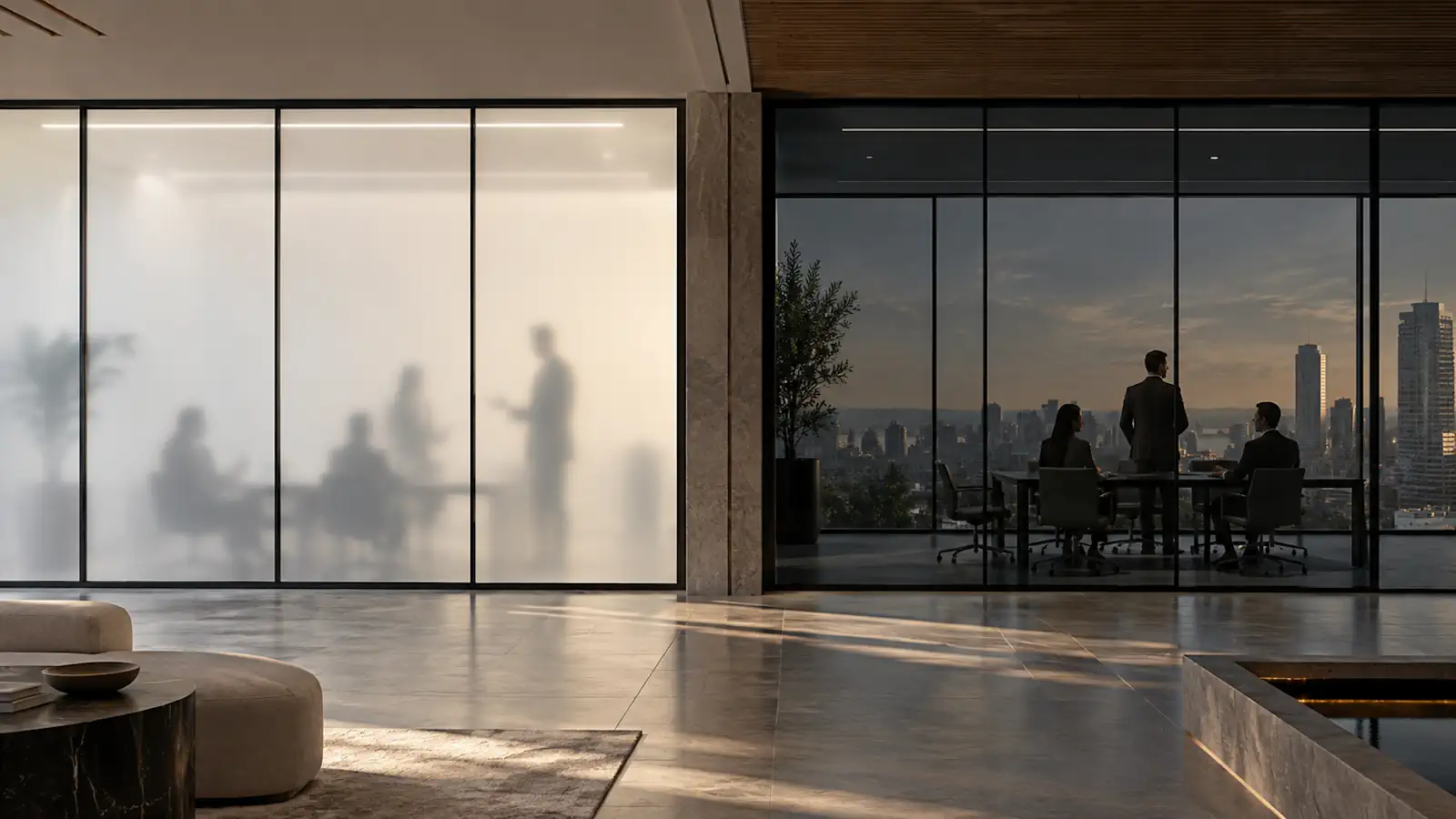
PDLC is used when you need to quickly make the glass frosted and hide what is happening behind it. Electrochromic glass is used when you need protection from the sun, reduced heat gain, while preserving the view outside and adding privacy. How well the interior can be seen depends on the degree of tinting and the lighting on both sides.
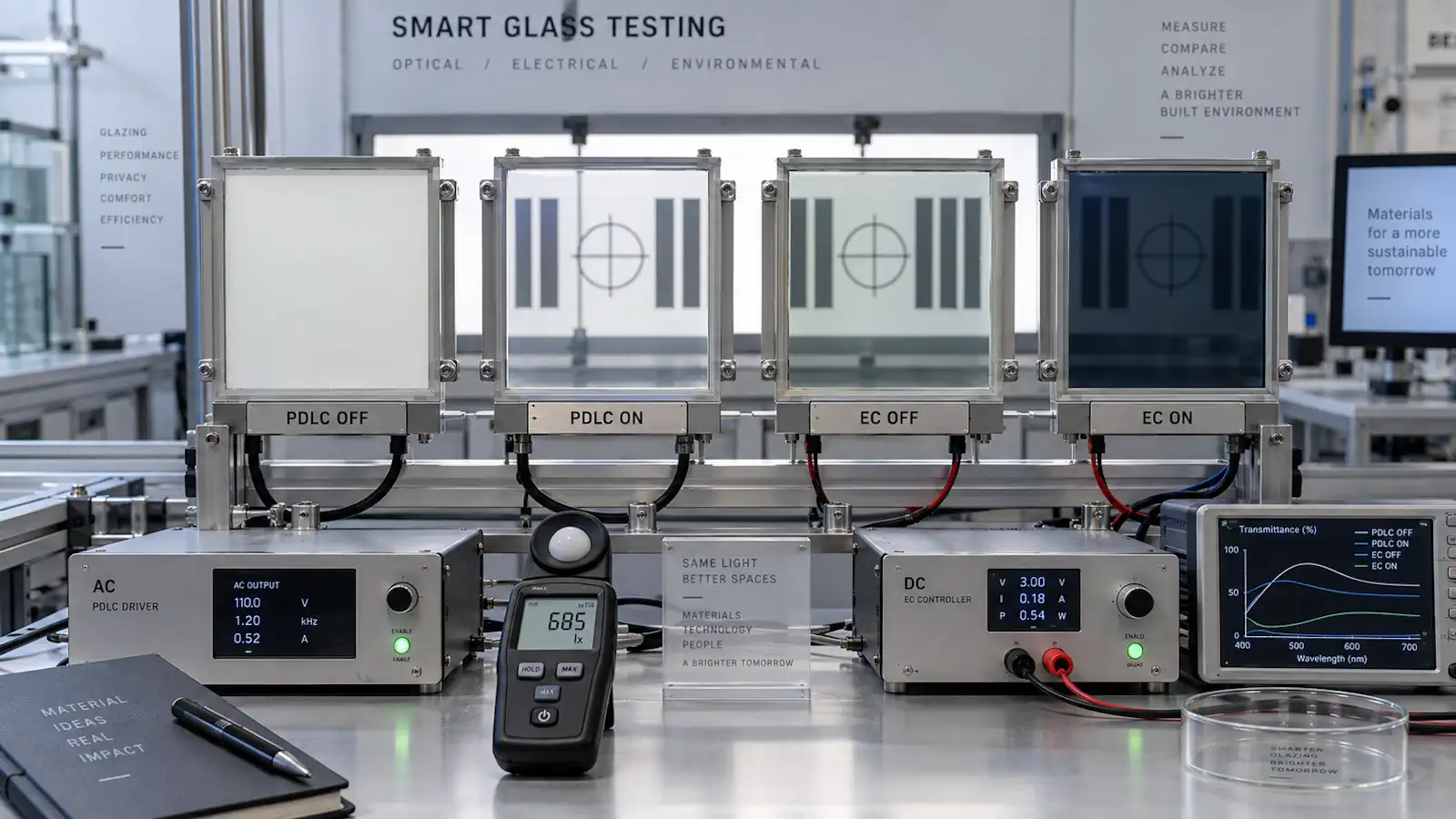
What is PDLC
PDLC is a liquid-crystal film. It is placed between layers of glass or applied to finished glass.
Classic PDLC works simply:
- No power — the glass is frosted
- Power on — the glass is transparent
It switches instantly. Press a button — and it is done.
What is electrochromic glass
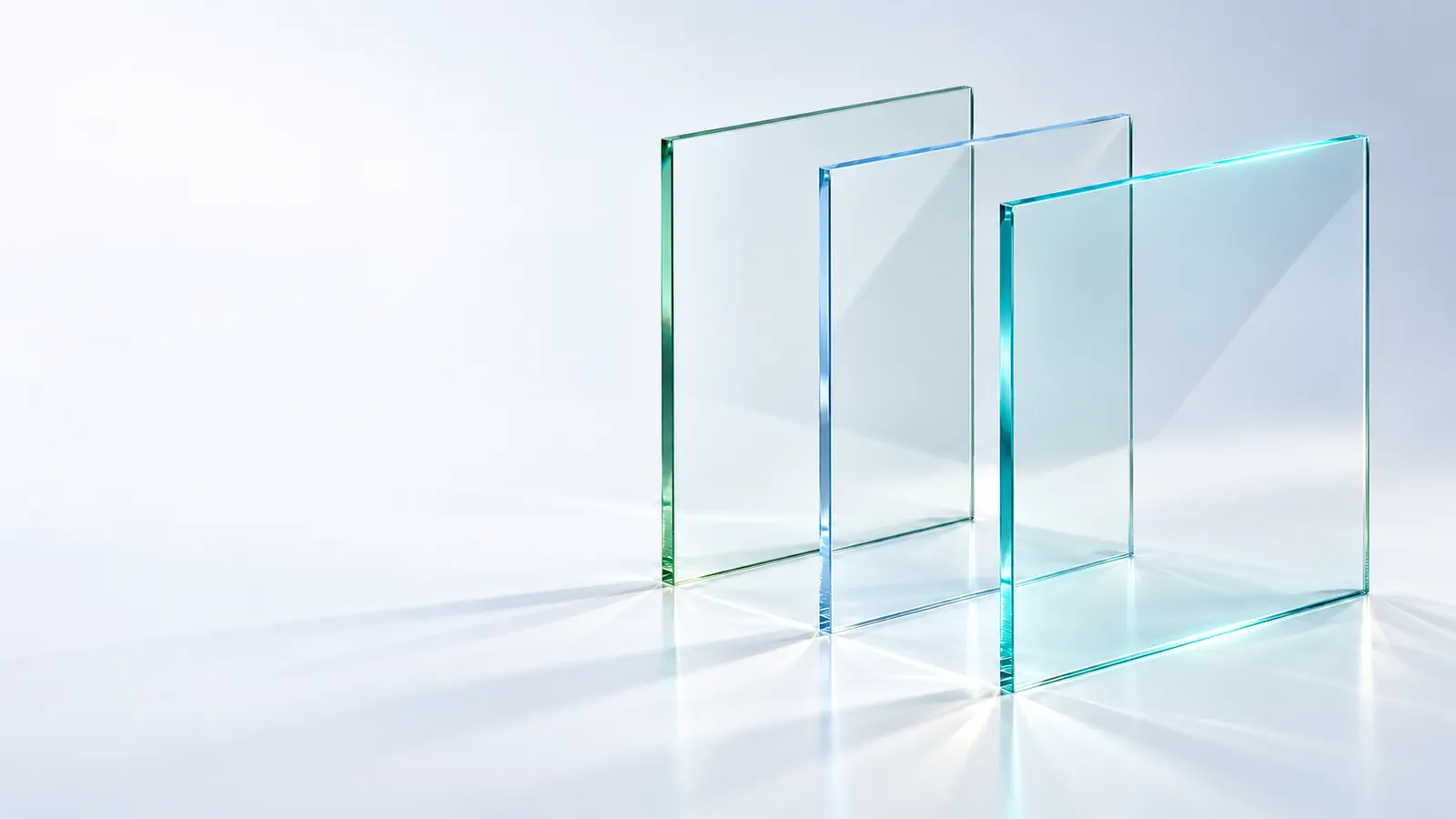
Electrochromic glass does not turn frosted. It changes its tint from light to dark, like sunglasses with adjustable shading.
When a weak electrical signal is applied, charged particles move inside the glass. The glass gradually darkens or lightens, while the view outside is preserved. Darkening also makes it more difficult to see through the glass from outside. However, the effect depends on lighting: in the evening, with the lights on indoors, the interior may still be visible from the street.
Electrochromic glass works more slowly than PDLC. The transition takes several minutes, depending on the size of the glass and the temperature. For a car, home, or office, this is usually convenient: the glass can be darkened in advance or controlled automatically.
Key differences
| Parameter | PDLC | Electrochromic |
|---|---|---|
| What happens | Transparent ↔ frosted | Light ↔ dark |
| Can you see through the glass? | Details are hidden, silhouettes may be visible | Yes, the view is preserved |
| Speed | Instant | Several minutes |
| Main purpose | Privacy | Sun protection and comfort |
| Where it is useful | Medical rooms, showers, hotels, driver-passenger partitions | Automotive, office partitions, showcases, façades, windows, roofs |
Electrochromic glass also has an advantage over PDLC in terms of durability. Electrochromic glass can comfortably serve for 15–20 years or even longer. PDLC usually starts to lose performance much sooner: polymers gradually age under sunlight and temperature changes, and the film may begin to yellow. There is also an important point related to electricity. To remain transparent, PDLC requires continuous power — the system operates without interruption. Electrochromic glass only needs power during the few minutes in which it changes tint. As a result, the load on the contacts is lower.
Classic PDLC has another feature — its power supply. To switch the film into the transparent state, AC voltage is used, usually several dozen volts. In typical systems it is around 50–70 V AC, so a separate converter is required in a car or another low-voltage system. In addition, this voltage imposes higher requirements on insulation, wiring, and contact protection than the low-voltage control used for electrochromic glass.
AC power can also have a less obvious side effect. In PDLC, optical transmission can vary slightly with the electric field; with low-frequency 50–60 Hz power, this modulation may appear at a frequency of around 100–120 Hz. When looking directly at it, the flicker is usually almost imperceptible, but it may become noticeable in peripheral vision, during eye movement, or in a simple “pencil test” — the effect is somewhat reminiscent of old CRT monitors. During prolonged exposure to such glazing, this barely visible pulsation may increase visual discomfort and fatigue.
Haze in PDLC in the transparent state
Even in the transparent state, PDLC retains a slight haze. With high-quality materials it is barely noticeable when viewed straight on, but at an angle the scattering becomes more apparent.
Some PDLC film manufacturers state light transmission of around 80%. But this figure refers to the film itself, not to finished glass with all its layers. After assembly, the final light transmission will be lower and depends on the glass, adhesive, and conductive layers.
In addition, the overall percentage of transmitted light does not show how much of that light has been scattered. A sufficient amount of light may pass through, while the image still appears less sharp.
Why PDLC is not used for windshields and front side windows
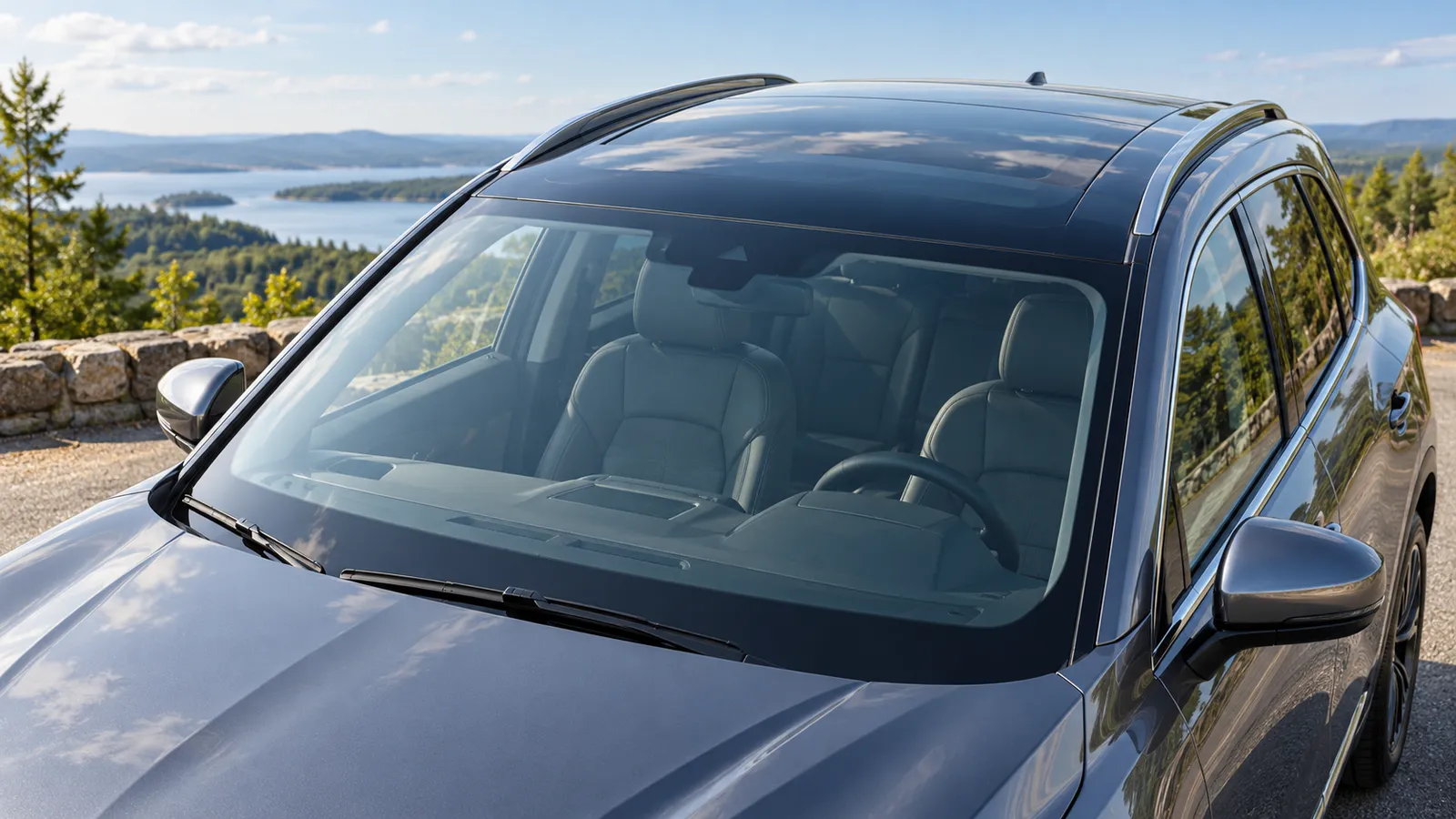
The windshield and front side windows are constantly in the driver’s field of view. Here, not only brightness matters, but also image clarity — without haze, scattering, or distortion. The driver must clearly see the road, pedestrians, vehicles, and mirrors in any weather and at night.
PDLC retains characteristic light scattering even in the transparent state. It becomes more noticeable at an angle. Therefore, PDLC film is not suitable for windshields and front side windows.
An important point: the term “automotive grade” means that the material can withstand automotive temperatures, vibration, and the glass assembly process. It does not mean that the film can be applied to any glass or used in the driver’s field of view. In automotive applications, the complete laminated glass is evaluated and certified as a whole, not the individual film.
Why electrochromic glass is better for automotive applications
Electrochromic glass does not turn frosted and does not block the view. It darkens like sunglasses, while the view is preserved. The driver and passengers receive protection from bright light and additional privacy without the milky haze characteristic of PDLC.
Electrochromic glass is suitable for the passenger area, sunroofs, and panoramic roofs.
What to choose for a home or office
For interiors, everything depends on the task: do you need to make a partition frosted and hide what is happening behind it, or preserve the view outside while adding privacy?
For façade windows, panoramic glazing, winter gardens, and atriums, electrochromic glass helps reduce sunlight brightness and heat while preserving the view outside. In interior partitions, it is used to control visibility where the space does not need to be completely hidden.
Electrochromic glazing can be connected to light sensors and climate-control systems. In sunny weather the windows become darker, and in cloudy weather they become lighter. This maintains comfort without curtains or blinds.
How to choose the technology
Ask yourself the main question: what result do you need?
If you want protection from bright sunlight and heat, control over light, a preserved view outside, and additional privacy — choose electrochromic glass.
If you need glazing in the driver’s field of view, do not use PDLC film; consider certified finished glass with a clear view.
We make electrochromic glass for projects where it is important to protect against sunlight and heat, preserve the view outside, and add privacy. Darkened glass makes what is happening inside less visible from the outside (although the degree of privacy depends on lighting on both sides). This solution works in cars, homes, and offices.
Would you like to order electrochromic glass for your project?
Write to us or call us — we will advise you and calculate the price.