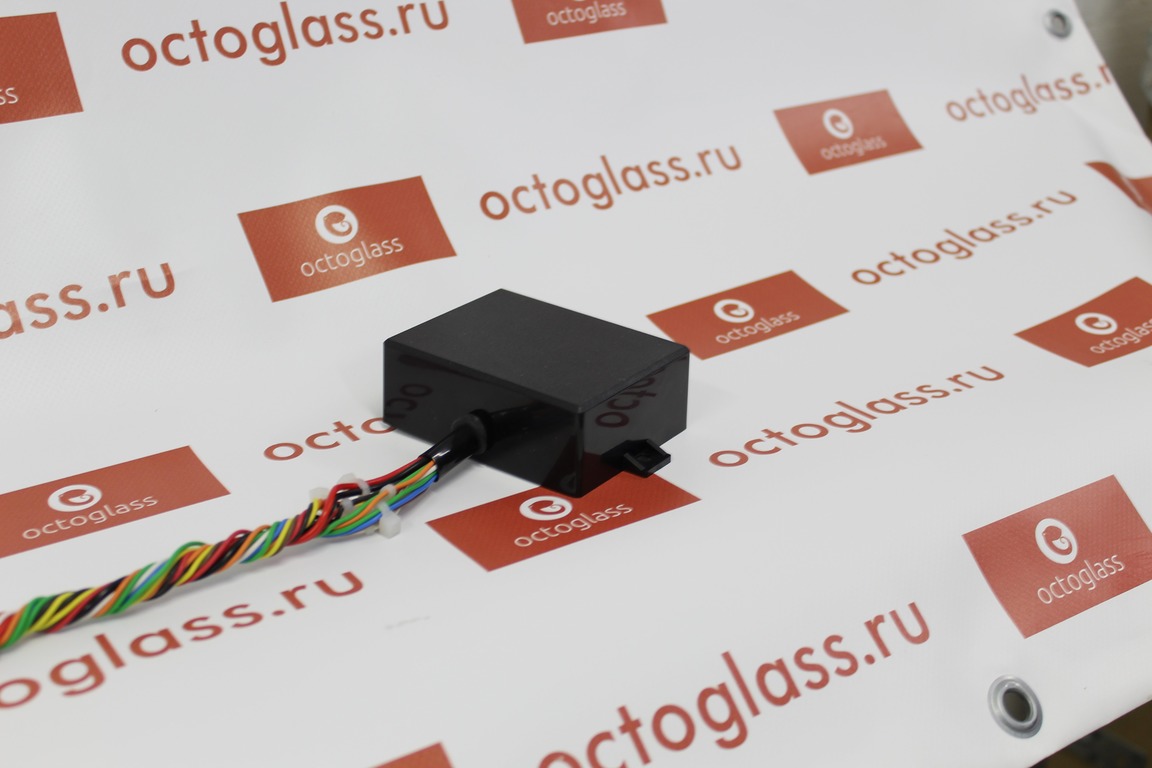
Octoglass chemists and engineers ran hundreds of experiments, used dozens of instruments, and spent several months building a model of electrochromic devices. With that model in place, we can simulate different states inside an electrochromic device and analyze the processes that occur there with the accuracy afforded by the mathematical tools we apply. As a result of this work, we developed controllers that enable fast and safe control of our glass with electrochromic electronic tinting. The KDS-2, KDS-2 Mini, and KDS-2 nano controllers were designed so they can be installed in hard-to-reach locations.
Glass controllers
Octoglass describes the mathematical model behind its electrochromic devices and the KDS-2, KDS-2 Mini, and KDS-2 nano controllers that model helped create.
Related products
Related news
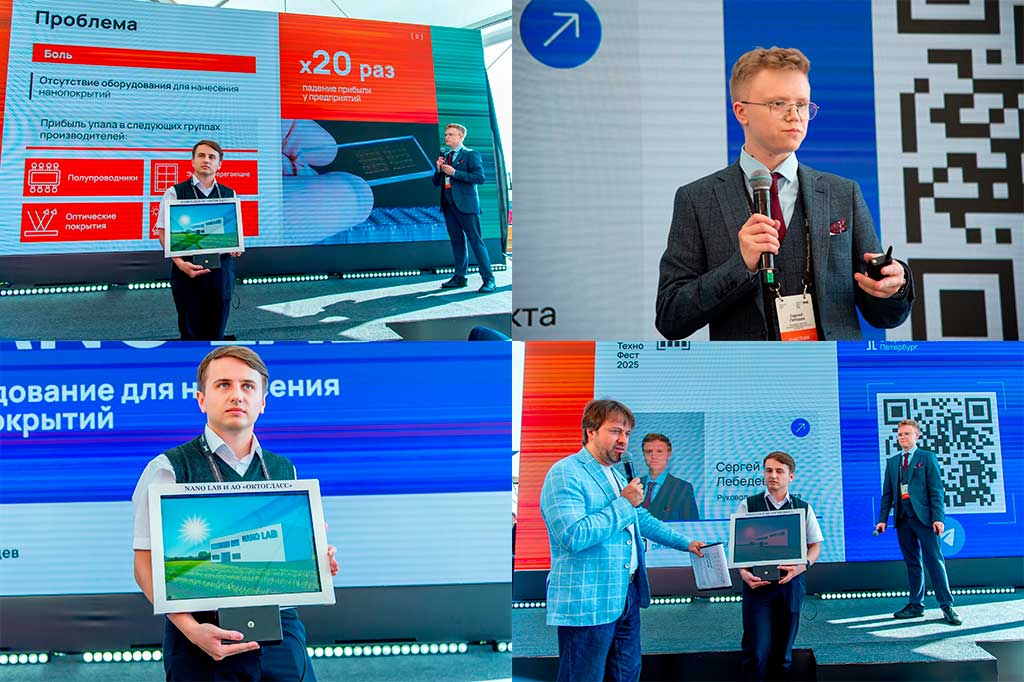
SPbGTI(TU) postgraduate Sergey Lebedev presented an innovative electrochromic glass control system at EnergoTechnoFest-2025 with Octoglass support
A control system developed by SPbGTI(TU) postgraduate Sergey Lebedev for large-format electrochromic glass ranked among the top 10 finalists of the Energy Technology Hub Incubator and was tested at Gazprom Neft facilities with Octoglass's support.
Scientists present a revolutionary method for controlling large-area electrochromic devices
Researchers from Saint Petersburg State Institute of Technology and AO Octoglass developed a charge-discharge control method that sharply improves uniformity in large-area electrochromic devices.
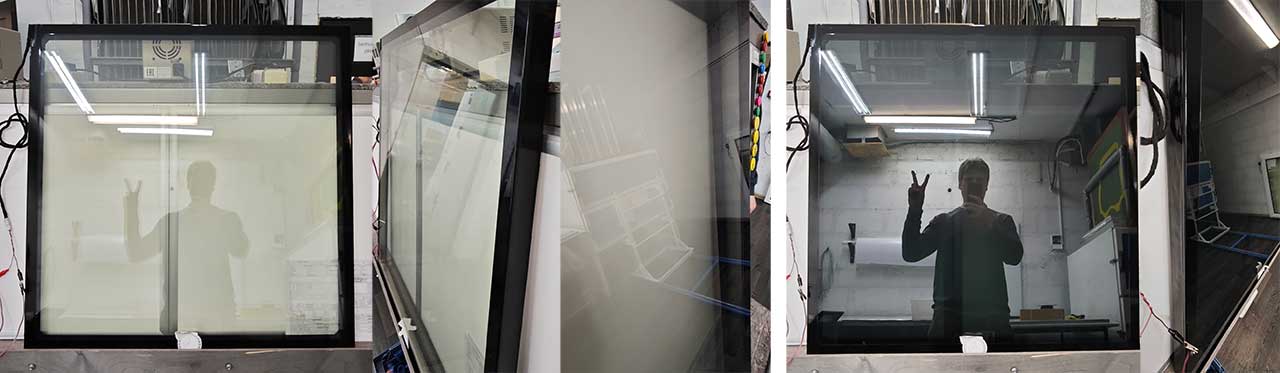
Octoglass electrochromic insulating glass units — now available to customers
Octoglass begins shipping its first electrochromic insulating glass unit, which lets customers adjust solar gain, reduce screen glare, and improve thermal insulation.