Electrochromic polymer offers many advantages over similar technologies. First, our technology delivers excellent consumer performance in color and contrast as well as switching speed. Second, any electronic tint color can be implemented at the customer’s request. Third, the lower and upper light-transmission limits can be flexibly adjusted within a single contrast-change delta. Power consumption of 0.3 W per m² while maintaining color, and no more than 1.5 W per m² during the coloring process, is entirely safe and energy-efficient.
Benefits of electrochromic technology
Octoglass explains why its electrochromic polymer outperforms comparable technologies in color, contrast, switching speed, and energy consumption.
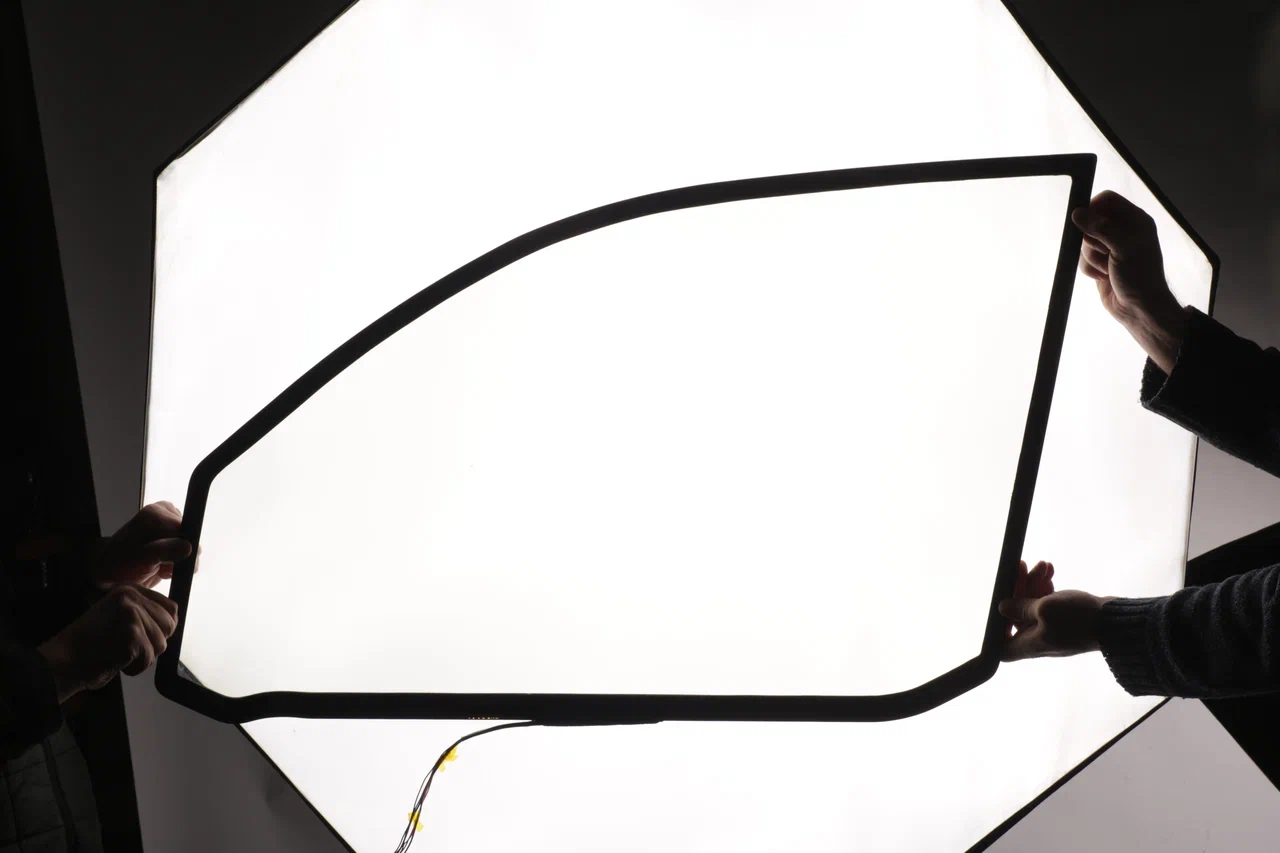
Related products
Related news
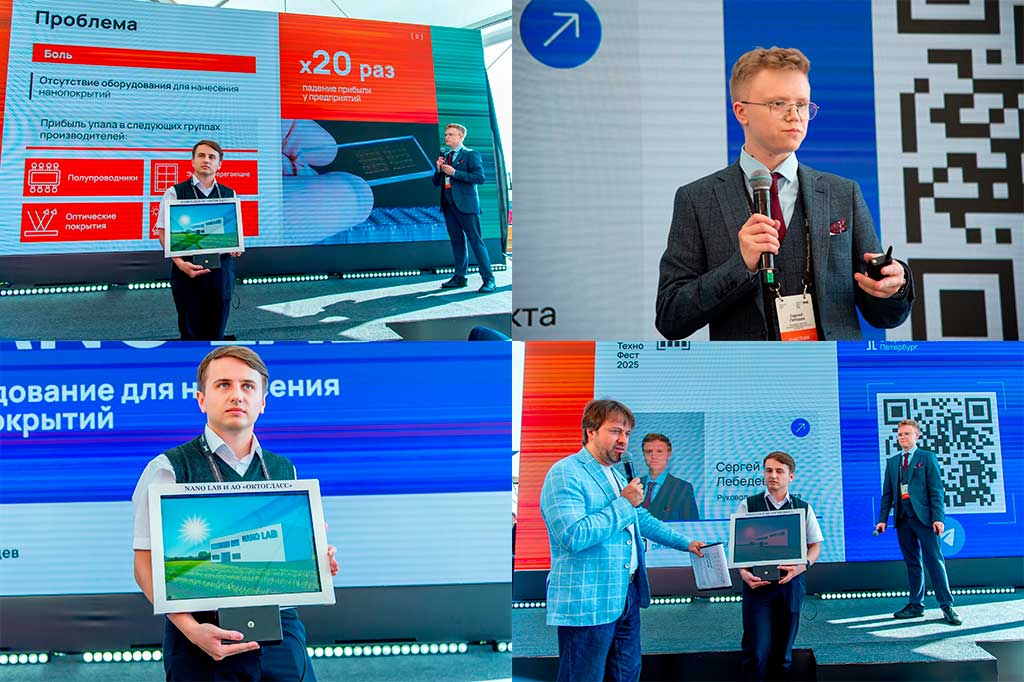
SPbGTI(TU) postgraduate Sergey Lebedev presented an innovative electrochromic glass control system at EnergoTechnoFest-2025 with Octoglass support
A control system developed by SPbGTI(TU) postgraduate Sergey Lebedev for large-format electrochromic glass ranked among the top 10 finalists of the Energy Technology Hub Incubator and was tested at Gazprom Neft facilities with Octoglass's support.
Scientists present a revolutionary method for controlling large-area electrochromic devices
Researchers from Saint Petersburg State Institute of Technology and AO Octoglass developed a charge-discharge control method that sharply improves uniformity in large-area electrochromic devices.
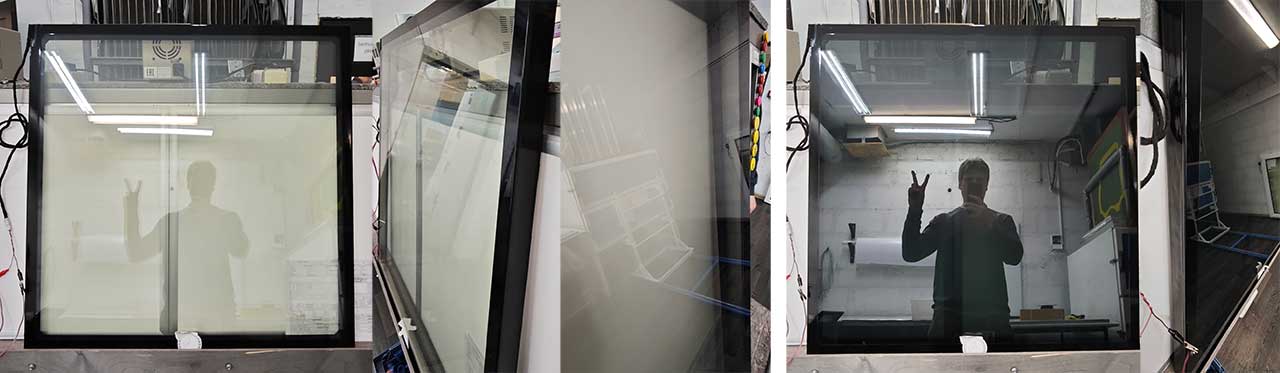
Octoglass electrochromic insulating glass units — now available to customers
Octoglass begins shipping its first electrochromic insulating glass unit, which lets customers adjust solar gain, reduce screen glare, and improve thermal insulation.